
This world and that to come are two enemies. We cannot therefore be friends to both; but we must resolve which we would forsake and which we would enjoy.
—Clement of Alexandria (150 -215), theologian, philosopher
Bible Truth Behind the Quote: “Do you not know that friendship with the world is enmity with God? Therefore whoever wishes to be a friend of the world makes himself an enemy of God” (James 4:4).
Ron Rhodes, 1001 Unforgettable Quotes about God, Faith, & the Bible (Eugene, OR: Harvest House Publishers, 2011).

Friendship
Friendship is a reciprocal relationship characterized by intimacy, faithfulness, trust, unmotivated kindness, and service. The concept can describe one’s relationship with people and with God.
Concept Summary
In Hebrew, the most common word related to friendship is רֵעַ (rēaʿ, “friend”). Another common way Hebrew expresses friendship is through the verb הָבַר (hābar, “to associate with”) and related words. The Septuagint uses πλησίον (plēsion, “neighbor”) as the most common translation of rēaʿ. The NT, however, favors the word φίλος (philos) for “friend,” whereas plēsion is used primarily for “neighbor.” Interestingly, both the OT and NT rarely use the word “friendship”; instead, the attitudes, actions, and qualities that characterize this relationship are the preferred way of describing it.
Theological Overview
Friendship in the Bible is expressed through emotional, social, political, and material avenues. In the OT, covenant faithfulness is the primary way friendship is described. The paradigm for friendship is the relationship between David and Jonathan (1 Sam 18, 20). While the story in 1 Samuel 20 conveys various qualities of friendship (deep emotion, intimacy, open communication, willingness to do anything for the other, loyalty, faithfulness, unmotivated kindness, joy), the central component of this narrative is “covenantal loyalty” (as communicated by the Hebrew חֶסֶד [ḥesed] three times in 1 Sam 20:8, 14, 15). Moreover, their friendship is sealed with a covenant (1 Sam 20:8; literally “covenant of Yahweh”). The relationship between God and Moses is another example of a “friendship” that is based on covenant faithfulness (Exod 33:11, 17).
Friendship language in the NT has strong ties to the Graeco-Roman patronage system in the first century AD. A reciprocal relationship between two individuals who were social equals was called a “friendship” (φιλία, philia). This relationship, like that between a patron and client, was characterized by the exchange of services and resources, mutual fidelity, and intimacy. Often, patrons would refer to their clients as friends (φίλος, philos), even though the former was higher on the social scale. Regardless of one’s social level, reciprocity stands out as the key feature of friendship. One example of this aspect of friendship is found in John 15:13–15. This text indicates three facets of friendship: love (ἀγάπη, agapē) exhibited by sacrifice is an essential quality between friends (philos); Jesus’ friends (philos) are those who obey his commands; and Jesus calls his disciples friends (philos) because what God knows was made known to them.
Friendship is not simply a casual acquaintance but a strong, deep connection between two individuals who are bound together in such a way that affects every aspect of their involvement in society. In both the OT and NT, friendship is based on volition, not obligation
Justin Langford, “Friendship,” ed. Douglas Mangum et al., Lexham Theological Wordbook, Lexham Bible Reference Series (Bellingham, WA: Lexham Press, 2014).
July 11: Best Friends Forever 1 Samuel 18:1–19:24; James 5:13–20; Psalm 120:1–7
This generation has more opportunities for communication than any before it, with email and social networking making it possible to interact with others 24/7. Yet suicide rates are higher than ever, and antidepressant medications have become almost standard fare. We have more connections than ever before, but they’re not relationships. We still feel alone. People need authentic community—a sense of communing with someone—to feel whole and healthy.
The story of David and Jonathan portrays the true nature of friendship: “the soul of Jonathan became attached to the soul of David, and Jonathan loved him as his own soul” (1 Sam 18:1). Jonathan could easily have been jealous of his friend; David was a great warrior and had just been brought into the household of Jonathan’s father, the king, as the king’s protégé (1 Sam 17:48–58; 18:2). Instead of being jealous, Jonathan responded with love and kindness, and the two became the most steadfast friends.
Authentic relationship is built on trust, which often starts when one person sacrifices himself for the other. Jonathan made such a sacrifice: “Jonathan stripped off the robe that he was wearing and gave it to David, along with his fighting attire, and even his sword, his bow, and his belt” (1 Sam 18:3–4). Because Jonathan loved David as a friend, their relationship grew into a deep-rooted loyalty. When we share that deep trust and loyalty with a friend, we can grow in God’s will together. We all need someone we can rely on; David and Jonathan demonstrate how powerful such a relationship can be. They teach us what it means to follow Yahweh with someone else at your side.In the early Church, authentic relationships were not just an idea—they were a way of life: “Is anyone among you sick? He should summon the elders of the church and they should pray over him, anointing him with olive oil in the name of the Lord” (Jas 5:14). The early Church didn’t respond to sickness or pain by saying, “I’ll pray for you.” They actually prayed. Just as Jonathan, in one swift action, gave David the honor of being like the king’s son, so the early Church swiftly took care of their own. They made friends by being loyal, as Christ was loyal to them. They created community by showing love and kindness without requiring that kindness to be returned. But the return on investment was great: It laid the foundation for a worldwide movement.
How can you show authentic friendship to others?
JOHN D. BARRY
John D. Barry and Rebecca Kruyswijk, Connect the Testaments: A One-Year Daily Devotional with Bible Reading Plan (Bellingham, WA: Lexham Press, 2012).

TOPICS:
Americana, Christian Life, Culture/Society, Informed Citizenship, Informed Patriotism, Pro-Life, Military/Veterans, You Can’t Make This Up, and more.
We hope you become informed readers and citizens based both Biblically and upon our founding fathers:
Acts 17:10-12, 2 Tim 2:14-16, Thomas Jefferson, Benjamin Franklin, and Thomas Paine
Maine Gov. Janet Mills to sign bill allowing late-term abortions – reports.
Life Legal Defense Foundation Fights Biden Administration’s Scheme to Kill Children in Hospital ERs
Satanic Temple Loses Lawsuit to Overturn Texas Abortion Ban
Gates and Clinton Families Pressuring Liberia to Legalize Abortions Up to Birth
.
.
Conservatives Go to Red States and Liberals Go to Blue as the Country Grows More Polarized – reports
Anti-Christian Hate Crime Case Opened After Disturbing Discovery on Church’s Front Lawn
Congratulations, a Man Just Won Miss Netherlands 🙃🙃🙃
CDC advises biological men on ‘chestfeeding’ their babies; experts worry about risk to children 🙄🙄🙄🙄
PTA Pushing Transgender Ideology: The Parent Teacher Association Turns on Parents
Fauci Prompted ‘Cover-Up’ to ‘Disprove’ COVID-19 Lab Leak Theory, House GOP Report Says
Christian social worker says job offer was rescinded over his beliefs on sexuality
Thirty months of lies about Jan. 6th
CHOLERA: Plague of 19th Century, First Global Epidemic; Day of Fasting proclaimed by President Taylor – American Minute with Bill Federer
Battle of Brooklyn Heights & the Providential fog that allowed Washington’s Army to Escape! – American Minute with Bill Federer
Recruiting shortfalls linked to teaching of history, woke policies, etc.
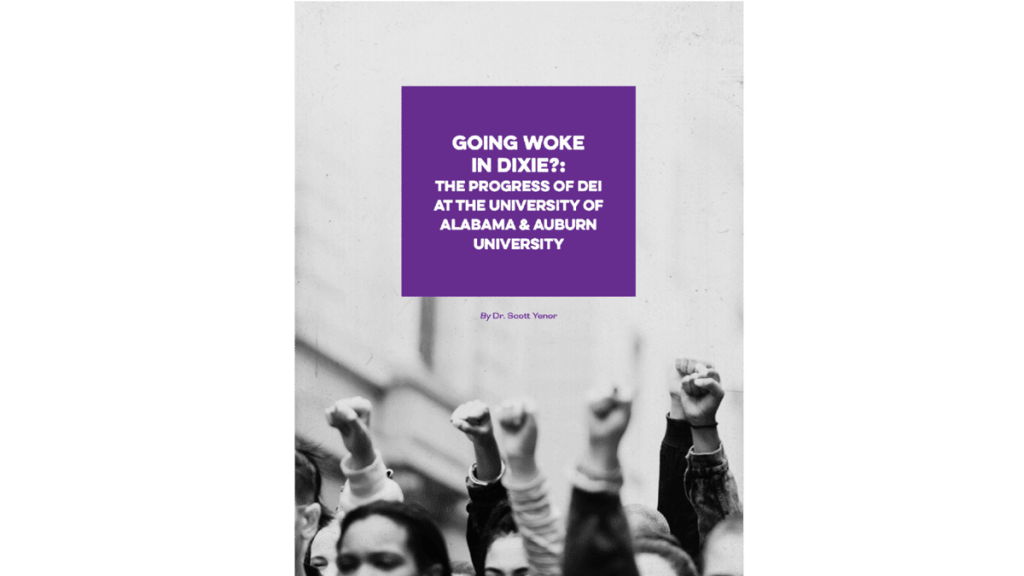
A new report—Going Woke in Dixie? The Progress of DEI at the University of Alabama & Auburn University—from Dr. Scott Yenor, a Washington Fellow at the Claremont Institute’s Center for the American Way of Life, details how this DEI transformation is coming to two of Alabama’s once-heralded schools.

Native Chilean Axel Kaiser witnessed a Marxist revolution overtake his beloved homeland in Latin America, reversing decades of prosperity the country once enjoyed thanks to a free market and leaders who enforced the rule of law. Seeing the parallels between the leftist ideology plaguing Chile and the United States, Axel sends a dire warning to the Western world—if we lose the United States, we lose “the last best hope of Earth” for freedom. Watch Now
Is the Father Reluctantly Gracious?
How Both “Death With Dignity” and Nazi Propaganda Redefine Compassion
Further Up, Further In: C.S. Lewis After His Conversion
Ten Principles for Church Song
Discover more from Faithful Steward Ministries and FSM Women's Outreach
Subscribe to get the latest posts sent to your email.
 Faithful Steward Ministries and FSM Women's Outreach