
INDEPENDENCE DAY SPECIAL

.
FREE and FREEDOM. The Scriptures considering our whole nature by the fall under the vassalage of sin and Satan, represent our deliverance from both by grace under the character of spiritual freedom. And Jesus, in a very striking manner, represents the greatness of it by a contrast, drawn to a state of slavery. “Whosoever committeth sin (saith Jesus,) is the servant of sin; and the servant abideth not in the house for ever, but the son abideth ever. If the son, therefore, shall make you free, ye shall be free indeed.” (John 8:34–36.)
Robert Hawker, The Poor Man’s Concordance and Dictionary to the Sacred Scriptures (London: Ebenezer Palmer, 1828), 286.
LIBERTY. The biblical idea of liberty (freedom) has as its background the thought of imprisonment or slavery. Rulers would imprison those whom they regarded as wrongdoers (Gn. 39:20); a conquered nation might be enslaved by its conqueror, or a prisoner of war by his captor, or an individual might, like Joseph, be sold into slavery, When the Bible speaks of liberty, a prior bondage or incarceration is always implied. Liberty means the happy state of having been released from servitude for a life of enjoyment and satisfaction that was not possible before. The idea of liberty appears in Scripture in its ordinary secular application (e.g. Ps. 105:20; Acts 26:32); but it also receives a significant theological development. This sprang from Israel’s realization that such freedom from subjugation by foreigners as she enjoyed was God’s gift to her. In the NT liberty becomes an important theological concept for describing salvation.
J. I. Packer, “Liberty,” ed. D. R. W. Wood et al., New Bible Dictionary (Leicester, England; Downers Grove, IL: InterVarsity Press, 1996), 684–685.
Faith
Faith refers to a sense of trust, guiding belief, faithfulness, and often a committed sense of loyalty.
Concept Summary
In the Old Testament, the concept of faith is often expressed by the Hebrew words אֱמֶת (ʾĕmet, “faithfulness”), בָּטַח (baṭaḥ, “to trust”), אֱמוּנָה (ʾĕmûnâ, “faithfulness”), and אָמַן (ʾāman, “to believe”). Other less frequent words for concepts of faith and faithfulness include צְדָקָה (ṣĕdāqâ, “righteousness”), which can signify faithfulness to God’s covenant, and three verbs for waiting with expectation, which implies trust: יָחַל (yāḥal, “to wait expectantly”), קָוָה (qāwâ, “to wait expectantly”; e.g., Isa 25:9; Psa 25:5), and חָכָה (ḥākâ, “to wait patiently”; e.g., Hab 2:3). The idea of “the fear of God” can be an important way of speaking about faith as an appropriate awareness of God’s dominion and authority over human beings (e.g., Gen 22:12; Exod 1:17; 9:30; Acts 10:2; 13:16).
In the Septuagint, the concept of faith is expressed with ἀλήθεια (alētheia, “loyalty”), δικαιοσύνη (dikaiosynē, “righteousness”), and πίστις (pistis, “faith”). The word dikaiosynē, which indicates righteousness or faithfulness to the covenant, pervades the book of Isaiah in the Septuagint (e.g., Isa 1:21; 5:16; 9:7; 42:6).
Chris Kugler, “Faith,” ed. Douglas Mangum et al., Lexham Theological Wordbook, Lexham Bible Reference Series (Bellingham, WA: Lexham Press, 2014).
The concept of faith is significant for the OT, but it becomes even more important in the NT. There, the idea of faith is expressed most often with πίστις (pistis, “faith”) and closely related to the concept of hope (ἐλπίς, elpis). The NT communicates some of its most important theological concepts with pistis: the faithfulness (pistis) of God (e.g., Rom 3:3); the faithfulness (pistis) of Jesus the Messiah (e.g., Gal 2:16; see below); and human faith (pistis) in God and/or Jesus as the Messiah (e.g. Rom 10:9).
FAITH. This is the great and momentous word in Scripture, which hath given rise to endless disputes, and employed the minds of men in all ages to explain; and yet to thousands still remains as obscure as ever. But notwithstanding all that the bewildered and erroneous mind of man may say on faith, the scriptural account of faith is the simplest and plainest thing in the world. Faith is no more than the sincere and hearty assent and consent of the mind to the belief of the being and promises of God, as especially revealed to the church in the person and redemption-work of the Lord Jesus Christ. JEHOVAH, in his threefold character of person, Father, Son, and Holy Ghost, hath mercifully been pleased to reveal himself as “forgiving iniquity, transgression, and sin,” and giving eternal life to the church in Christ Jesus. And these blessings are all declared to be in the person, and procured to the church by the sole undertaking of the Lord Jesus Christ, as the glorious Head of his body the church, the fulness of him “that filleth all in all.”
The hearty, cordial, and sincere belief in these blessed truths of God is called faith, because it is giving credit to the testimony of God, and relying upon his faithfulness for the fulfilment of them. The apostle John, in his first Epistle, fifth chapter, and ninth and following verses, puts this doctrine in so clear a point of view, that, under divine teaching, if attended to, it would be impossible to mistake it. “If we receive (saith John) the witness of men, the witness of God is greater; for this is the witness of God which he hath testified of his Son. He that believeth on the Son of God hath the witness in himself. He that believeth not God, hath made him a liar, because he believeth not the record that God gave of his Son. And this is the record that God hath given to us, eternal life; and this life is in his Son. He that hath the Son, hath life; and he that hath not the Son of God, hath not life.”
No form of words could have been more happily chosen to state what is the act of faith, and to put it in a clear and full light. Immense and unspeakable blessings are promised by God. It is not the greatness of the blessings which demands our faith, but the greatness of the Being promising. Indeed, the greater the blessings are, the greater would be the difficulty of believing, unless some other warrant and authority become the foundation for belief. The bottom, therefore, of all faith is, that what we are called upon to believe is founded in JEHOVAH himself. JEHOVAH that cannot lie; JEHOVAH that will not lie. An Almighty Promiser that never can out-promise himself. Hence, when Moses at the bush desired a confirmation of the truth, the Lord gave him to deliver to Israel, by knowing his name, and having such assurances to make to them as might silence every doubt. “Behold, (said he,) when I come to the children of Israel, and shall say unto them, The God of your fathers hath sent me unto you, and they shall say unto me, What is his name? what shall I say unto them? And God said unto Moses, I AM THAT I AM.” That is, I AM a being self-existing, and eternal; and which, therefore, gives a being to all my promises. So that this is the sure ground of faith. Not the greatness and blessedness of the promise; but the greatness, blessedness, and faithfulness of the Promiser. And to believe in the almighty Promiser in his assurances in Christ, is faith. I only add, however, under this article, that though faith is the simplest and plainest act of the mind, yet both the possession and the exercise of it is the gift of God. “Unto you, (saith an apostle,) it is given to believe.” (Phil. 1:29.) And hence every truly awakened and regenerated believer finds daily reason to cry out, as the apostle did to Christ, “Lord, increase our faith!” (Luke 17:5.)
Robert Hawker, The Poor Man’s Concordance and Dictionary to the Sacred Scriptures (London: Ebenezer Palmer, 1828), 240–242.
C.H. Spurgeon – 62 Sermons on Faith
Faith and Reason Web Page by R C Sproul
C.H. Spurgeon – 2 Sermons on Liberty (Freedom)

Various Articles, Podcasts, etc. on
Freedom of the Will PDF by Jonathan Edwards
True Christian Freedom Web Page by Samuel Bolton

TOPICS:
Americana, Christian Life, Culture/Society, Informed Citizenship, Informed Patriotism, Pro-Life, Military/Veterans, You Can’t Make This Up, and more.
We hope you become informed readers and citizens based both Biblically and upon our founding fathers:
Acts 17:10-12, 2 Tim 2:14-16, Thomas Jefferson, Benjamin Franklin, and Thomas Paine
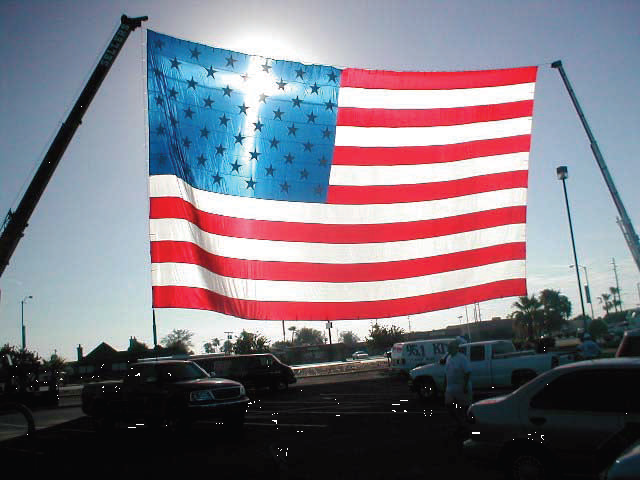
Independence Day — “GREATEST REVOLUTION that has ever taken place IN THE WORLD’S HISTORY”-Ronald Reagan – American Minute with Bill Federer
In celebration of our nation’s birthday, I hope you will take a moment to enjoy this video of “America the Beautiful,” sung by the Hillsdale College Choir: https://vimeo.com/715761150/1d4137f6fb
Chuck Colson on the American Creed
| Celebration: In honor of Independence Day, we’ve gathered a collection of articles that we’ve published over the years about the meaning and importance of this day. Enjoy! These 18 Photos Show America’s Long History of Celebrating the Fourth Why ‘Red, White, and Blue’ Should Bridge Red vs. Blue Divide on Fourth of July Independence Forever: Why America Celebrates the Fourth of July Reflections on the Meaning of American Citizenship What Makes You a #ProudAmerican? 3 Actions You Can Take to Preserve Freedom on Independence Day Independence Day Disaster: What If There Never Was a United States of America? Heritage Explains Podcast: The Declaration of Independence |
The Founding Fathers and the Wicked Stepfounders
In 303 Creative Decision, the Supreme Court Rules for Freedom of Speech
The following are from Crosswalk Ministries Podcasts about America and Christianity
Was George Washington A Christian w Richard Raines
Learning from History to Keep Moving Forward with Guest Joshua Cohen
Why Believers Should Be Involved in Politics
A Prayer During National Unrest
A Prayer for When The World Tries to Tell You What to Do

Discover more from Faithful Steward Ministries and FSM Women's Outreach
Subscribe to get the latest posts sent to your email.
 Faithful Steward Ministries and FSM Women's Outreach