
CONTEXT
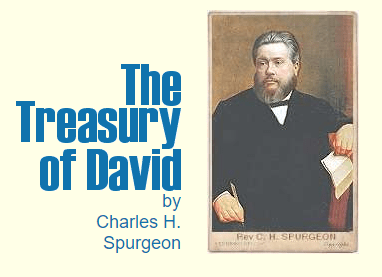
The following are taken from this online source at the Spurgeon Archive.
TITLE AND SUBJECT. There is no title to this psalm, but it is evidently a companion to the hundred and eleventh, and, like it, it is an alphabetical psalm. Even in the number of verses, and clauses of each verse, it coincides with its predecessor, as also in many of its words and phrases. The reader should carefully compare the two psalms line by line. The subject of the poem before us is—the blessedness of the righteous man, and so it bears the same relation to the preceding which the moon does to the sun; for, while the first declares the glory of God, the second speaks of the reflection of the divine brightness in men born from above. God is here praised for the manifestation of his glory which is seen in his people, just as in the preceding psalm he was magnified for his own personal acts. The hundred and eleventh speaks of the great Father, and this describes his children renewed after his image. The psalm cannot be viewed as the extolling of man, for it commences with “Praise ye the Lord; “and it is intended to give to God all the honour of his grace which is manifested in the sons of God.
DIVISION. The subject is stated in the first verse, and enlarged upon under several heads from 2 to 9. The blessedness of the righteousness is set forth by contrast with the fate of the ungodly in verse 10.
Verse 7. He shall not be afraid of evil tidings. He shall have no dread that evil tidings will come, and he shall not be alarmed when they do come. Rumours and reports he despises; prophecies of evil, vented by fanatical mouths, he ridicules; actual and verified information of loss and distress he bears with equanimity, resigning everything into the hands of God. His heart is fixed, trusting in the Lord. He is neither fickle nor cowardly; when he is undecided as to his course he is still fixed in heart: he may change his plan, but not the purpose of his soul. His heart being fixed in solid reliance upon God, a change in his circumstances but slightly affects him; faith has made him firm and steadfast, and therefore if the worst should come to the worst, he would remain quiet and patient, waiting for the salvation of God.
An Exposition upon the 112 Psalme. The high way to everlasting blessednesse. Written for the benefit of God’s Church. By T. S. . . . London, 1621. (8vo. This exposition is upon the first two verses of the Psalm only.)
STUDY
EXPLANATORY NOTES AND QUAINT SAYINGS
Whole Psalm. The hundred and eleventh and the hundred and twelfth psalms, two very short poems, dating apparently from the latest age of inspired psalmody, present such features of resemblance as to leave no doubt that they came from the same pen. In structure they are identical; and this superficial resemblance is designed to call attention to something deeper and more important. The subject of the one is the exact counterpart of the subject of the other. The first celebrates the character and works of God; the second, the character and felicity of the godly man.—William Binnie.
Whole Psalm. Here are rehearsed the blessings which God is wont to bestow on the godly. And as in the previous Psalm the praises of God were directly celebrated, so in this Psalm they are indirectly declared by those gifts which are conspicuous in those who fear him.—Solomon Gesner.
Whole Psalm. This psalm is a banquet of heavenly wisdom; and as Basil speaketh of another part of Scripture, likening it to an apothecary’s shop; so may this book of the psalms fitly be compared; in which are so many sundry sorts of medicines, that every man may have that which is convenient for his disease.—T. S., 1621.
Whole Psalm. The righteousness of the Mediator, I make no doubt, is celebrated in this psalm; for surely that alone is worthy to be extolled in songs of praise: especially since we are taught by the Holy Ghost to say, “I will make mention of thy righteousness, even of thine only.” I conclude, therefore, that in this alphabetical psalm, for such is its construction, Christ is “the Alpha and the Omega.”—John Fry.
Verse 7. He shall not be afraid of evil tidings. How can you affright him? Bring him word his estate is ruined; “yet my inheritance is safe, “says he. Your wife, or child, or dear friend is dead; “yet my Father lives.” You yourself must die; “well, then, I go home to my Father, and to my inheritance.” For the public troubles of the Church, doubtless it is both a most pious and generous temper, to be more deeply affected for these than for all our private ones; and to sympathise in the common calamities of any people, but especially of God’s own people, hath been the character of men near unto him. Observe the pathetic strains of the prophet’s bewailing, when he foretells the desolation even of foreign kingdoms, much more of the Lord’s chosen people, still mindful of Sion, and mournful of her distresses. (Jer 9:1, and the whole Book of Lamentations.) Yet even in this, with much compassion, there is a calm in a believer’s mind; he finds amidst all hard news, yet still a fixed heart, trusting, satisfied in this, that deliverance shall come in due time, Ps 102:13, and that in those judgments that are inflicted, man shall be humbled and God exalted, Isa 2:11,15,16; and that in all tumults and changes, and subversion of states, still the throne of God is fixed, and with that the believer’s heart likewise, Ps 93:2. So Ps 29:10.—Robert Leighton.
Verse 7. He shall not be afraid, etc. If a man would lead a happy life, let him but seek a sure object for his trust, and he shall be safe: He shall not be afraid of evil tidings: his heart is fixed, trusting in the Lord. A man that puts his confidence in God, if he hears bad news of mischief coming towards him, as suppose a bad debt, a loss at sea, accidents by fire, tempests, or earthquakes, as Job had his messenger’s of evil tidings, which came thick and threefold upon him, yet he is not afraid, for his heart is fixed on God: he hath laid up his confidence in God, therefore his heart is kept in an equal poise; he can say, as Job, “The Lord gave, and the Lord hath taken away; blessed be the name of the Lord, “Job 1:21. His comforts did not ebb and flow with the creature, but his heart was fixed, trusting in the Lord.—Thomas Manton.
Verse 7 (first clause). The good man will not be alarmed by any report of danger, whilst the dishonest man, conscious of his wickedness, is always in a state of fear.—George Phillips.
Verse 7. His heart is fixed, or prepared, ready, and in arms for all services; resolved not to give back, able to meet all adventures, and stand its ground. God is unchangeable; and therefore faith is invincible, for it sets the heart on him; fastens it there on the rock of eternity; then let winds blow and storms arise, it cares not.—Robert Leighton.
Verse 7. His heart is fixed—established fearlessly. So Moses, with the Red Sea before and the Egyptian foes behind (Ex 14:13); Jehoshaphat before the Ammonite horde of invaders (2Ch 20:12,15,17); Asa before Zerah, the Ethiopian’s “thousand thousand, and three hundred chariots” (2Ch 14:9-12). Contrast with the persecuted David’s fearless trust, Saul’s panic stricken feeling at the Philistine invasion, inasmuch as he repaired for help to a witch. How bold were the three youths in prospect of Nebuchadnezzar’s fiery furnace! How fearless Stephen before the council! Basilius could say, in answer to the threats of Caesar Valens, “such bug bears should be set before children.” Athanasius said of Julian, his persecutor, “He is a mist that will soon disappear.”—A. R. Fausset.
Verse 7. Trusting in the Lord, I need not prove that a man can have no other sure comfort and support. For what can he confide in? His treasure? This may soon be exhausted, or it may awaken the avarice or ambition of a powerful enemy, as Hezekiah’s did the king of Babylon, and so instead of being a defence, prove the occasion of his ruin. Can he confide in power? Alas, he knows that when this is grown too big to fall by any other hands, it generally falls by its own. Can he finally confide in worldly wisdom? Alas, a thousand unexpected accidents, and unobserved latent circumstances, cross and frustrate this, and render the Ahithophels not only unfortunate, but often contemptible too.—Richard Lucas, 1648-1715.
DEVOTION
SERMONS
Metropolitan Tabernacle Pulpit
HEART’S-EASE
NO. 647
A SERMON – DELIVERED ON SUNDAY MORNING, AUGUST 27, 1865
BY C. H. SPURGEON
AT THE METROPOLITAN TABERNACLE, NEWINGTON
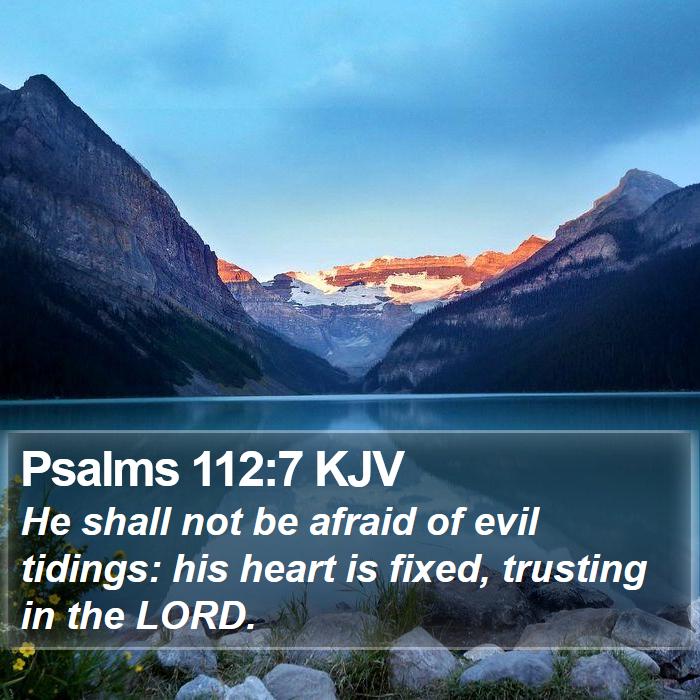
“He shall not be afraid of evil tidings: his heart is fixed, trusting in the LORD.” Psalm 112:7
By Thomas Watson
BONUS READ
The Rainbow in the Clouds – Grace Gems! Reference to our text is found in the last #31 section, but each is a worthy read.
Discover more from Faithful Steward Ministries and FSM Women's Outreach
Subscribe to get the latest posts sent to your email.
 Faithful Steward Ministries and FSM Women's Outreach