
Once again, my mind wandered, and I forgot to return to this yesterday after dealing with grandchildren. Yet that was beneficial because this morning’s devotional (attached) exemplifies the opposite of slander.

COMMENTS
Slander, Gossip, and Talebearing are all words the Bible uses to describe a transgression of the ninth commandment. Although there are some differences among them, they are sufficiently similar to be grouped here. Slander/Talebearing involves malice, whereas gossip need not involve malice; it is still evil.
In our youth, we would say, “Sticks and stones may break my bones, but words can never hurt me.” Of course, it was a lie, the name-calling hurt, and it worsened when someone who was not present related their version of the incident. Another saying from the WWII era was “loose lips sink ships.” It was an effort to keep sailors from disclosing information that could be passed on to the enemy.
DEFINITION
TALEBEARING, SLANDER. These words translate, in the OT, expressions implying secrecy (Pr. 18:8, ‘whisperer’), evil report (Nu. 14:36), the giving out (Ps. 50:20) or carrying (Pr. 11:13) of slander, or the (wrong) use of tongue (Ps. 101:5) or feet (2 Sa. 19:27). In the NT the words translate accusation (1 Tim. 3:11, diabolos), speaking against (2 Cor. 12:20; 1 Pet. 2:1, katalalia) or defaming (Rom. 3:8, blasphēmeō). All talebearing, whether false (cf. Mt. 5:11) or not (cf. Dn. 3:8), malicious (Ps. 31:13; Ezk. 22:9) or foolish (Pr. 10:18; cf. 18:8 = 26:22; Mt. 12:36), especially between neighbours (Je. 9:4) or brothers (Jas. 4:11), is condemned (Lv. 19:16) and punished (Ps. 101:5) by God, and causes quarrelling (Pr. 26:20). Slander springs from the heart (Mk. 7:22) of the natural man (Rom. 1:30), excludes from God’s presence (Ps. 15:3), and must be banished from the Christian community (2 Cor. 12:20; Eph. 4:31; Col. 3:8; 1 Pet. 2:1; cf. [of women] 1 Tim. 3:11; Tit. 2:3), which itself suffers slander (Mt. 5:11; cf. Rom. 3:8).
STUDY
Exodus 20:16 You shall not bear false witness …
Exodus 20:16 Study Bible: “Do not give false testimony against …
How does Slander relate to Christian ethics
Slander occupies a significant place in Christian ethical teaching because it strikes at the heart of how believers should relate to one another and to God. Scripture identifies slander as one of the vices flowing from a corrupt heart, listing it alongside murder, adultery, and theft as a manifestation of inner spiritual disorder.1 As a false accusation that damages someone’s reputation, slander’s seriousness is underscored by its inclusion in the Decalogue.2
The ethical prohibition against slander connects directly to the Christian virtue of love. Within the context of the greatest commandment, loving one’s neighbor is characterized by refraining from slander.2 God’s remedy for slander is mutual love—we do not slander those we genuinely care for, and love guards others’ reputations as carefully as our own.3 Beyond personal relationships, this exhortation applies to corporate Christian relationships, where congregations and denominations can easily fall into slandering one another.4
Theologically, slander carries profound spiritual weight. It constitutes an implicit form of blasphemy, placing human judgment above God’s authority.2 To slander is to imitate Satan himself, whose very name—diabolos—means “slanderer.”4 Slander reveals the condition of one’s heart; it may spring from bitterness, unforgiveness, jealousy, or unresolved hurt.3
Regarding Christian response, Christ modeled the appropriate reaction by refusing to retaliate when insulted, instead entrusting himself to God’s just judgment.1 When believers suffer slander innocently, they are called to bear it patiently and even rejoice in such persecution.5 Slander hinders spiritual growth and damages Christian testimony; maintaining right relationship with God while indulging in slander is impossible.4
- 1Sharon Beekmann, Silencing Satan: 13 Studies for Individuals and Groups (Eugene, Oregon: Wipf and Stock, 2013). [See here, here, here.]
- 2Moisés Silva and Merrill Chapin Tenney, in The Zondervan Encyclopedia of the Bible, Q-Z (Grand Rapids, MI: The Zondervan Corporation, 2009), 533.
- 3Got Questions Ministries, Got Questions? Bible Questions Answered (Bellingham, WA: Faithlife, 2014–2021). [See here, here, here.]
- 4Derek Prime, James, Focus on the Bible Commentary (Ross-shire, Great Britain: Christian Focus Publications, 1995), 124–125.
- 5Alfred Ernest Garvie, “SLANDER or EVIL-SPEAKING,” in A Dictionary of the Bible: Dealing with Its Language, Literature, and Contents Including the Biblical Theology, ed. James Hastings et al. (New York; Edinburgh: Charles Scribner’s Sons; T. & T. Clark, 1911–1912), 4:552.
How should Christians Respond to Slander
Christian response to slander requires both inner conviction and outward conduct. Jesus modeled the appropriate response by refusing to retaliate when insulted and instead entrusting himself to God’s justice1. This pattern—non-retaliation coupled with reliance on divine judgment—forms the foundation for how believers should handle false accusations.
Finding encouragement in Christ’s teaching that those insulted for his sake are blessed and should rejoice in their heavenly reward2 provides perspective when facing slander. Following Paul’s example of commending oneself to God as his servant acknowledges that nothing occurs without God’s knowledge and approval2. Rather than defensive reactions, believers should prepare themselves to give an account of their hope with gentleness and respect, allowing their good behavior to shame the slanderer1.
Practically, when slandered, Christians should attempt reconciliation by going directly to the offended party to seek understanding and unity2. This involves hearing as little as possible about others’ faults, refusing to believe accusations without certainty, avoiding the spirit of those spreading rumors, moderating unkindness toward others, and assuming the accused would offer a different account if heard3.
Fundamentally, Christ enables his people to live in the light by curtailing evil speech and responding to slander in a godly manner through truth spoken in love, forgiveness, and appropriate humility1. Understanding that the struggle involves spiritual forces of evil, Christians put on God’s armor to withstand enemy assaults including slander and false accusations1. The Christian response ultimately reflects trust in God’s character and commitment to maintaining integrity regardless of false claims.
3Derek Prime, James, Focus on the Bible Commentary (Ross-shire, Great Britain: Christian Focus Publications, 1995), 125.
1Sharon Beekmann, Silencing Satan: 13 Studies for Individuals and Groups (Eugene, Oregon: Wipf and Stock, 2013). [See here, here, here, here, here.]
2Lisa Hughes, God’s Priorities for Today’s Woman: Discovering His Plan for You (Eugene, OR: Harvest House Publishers, 2011). [See here, here, here.]
The following is an excerpt from an email I received recently. It is a clear example of slander.

2011 Lincoln Fellow Ross Vought is WANTED for “Destroying Democracy.”
Walking the streets of Washington, D.C., recently, I was struck to see the face of 2011 Lincoln Fellow and longtime friend of The Claremont Institute, Russ Vought, plastered across the city in leftist protest art.

Russ–mild-mannered, serious, and scholarly–is now being depicted as a “TRAITOR” who “THINKS TRUMP SHOULD BE ABOVE THE LAW.”
If you know Russ, you might be tempted to laugh. But left-wing smears are never merely insults.
They are incitements–deliberate attempts to stir up violence among the deranged adherents of their destructive ideology.
We have seen this playbook far too often:
Steve Scalise. Brett Kavanaugh. Mike Johnson. President Trump. Charlie Kirk.
These threats are real, and they are escalating.
Thankfully, in his role as Director of the Office of Management and Budget (OMB), Russ is under constant protection–physically, and through our prayers.
His work is indispensable to the Trump Administration’s domestic policy agenda.
And that is precisely why the Left has made him a target…
DEVOTIONAL
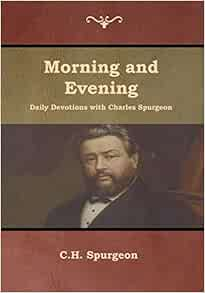
“Call thy labourers, and give them their hire.” —Matthew 20:8
God is a good paymaster; he pays his servants while at work as well as when they have done it; and one of his payments is this: an easy conscience. If you have spoken faithfully of Jesus to one person, when you go to bed at night you feel happy in thinking, “I have this day discharged my conscience of that man’s blood.” There is a great comfort in doing something for Jesus. Oh, what a happiness to place jewels in his crown, and give him to see of the travail of his soul! There is also very great reward in watching the first buddings of conviction in a soul! To say of that girl in the class, “She is tender of heart, I do hope that there is the Lord’s work within.” To go home and pray over that boy, who said something in the afternoon which made you think he must know more of divine truth than you had feared! Oh, the joy of hope! But as for the joy of success! it is unspeakable. This joy, overwhelming as it is, is a hungry thing—you pine for more of it. To be a soul-winner is the happiest thing in the world. With every soul you bring to Christ, you get a new heaven upon earth. But who can conceive the bliss which awaits us above! Oh, how sweet is that sentence, “Enter thou into the joy of thy Lord!” Do you know what the joy of Christ is over a saved sinner? This is the very joy which we are to possess in heaven. Yes, when he mounts the throne, you shall mount with him. When the heavens ring with “Well done, well done,” you shall partake in the reward; you have toiled with him, you have suffered with him, you shall now reign with him; you have sown with him, you shall reap with him; your face was covered with sweat like his, and your soul was grieved for the sins of men as his soul was, now shall your face be bright with heaven’s splendour as is his countenance, and now shall your soul be filled with beatific joys even as his soul is.
C. H. Spurgeon, Morning and Evening: Daily Readings (London: Passmore & Alabaster, 1896).
Discover more from Faithful Steward Ministries and FSM Women's Outreach
Subscribe to get the latest posts sent to your email.


It is seems strange to me, but I don’t recall hearing or reading many sermons against slander. Perhaps, that is why it is so difficult to avoid hearing or reading slanderous material.
Good job!
LikeLike
Those in the pulpit who preach by subject matter rarely touch on the tough topics. Those who practice Expository Preaching usually are hard-pressed not to. I always seek an Expository Preaching church.
LikeLike