
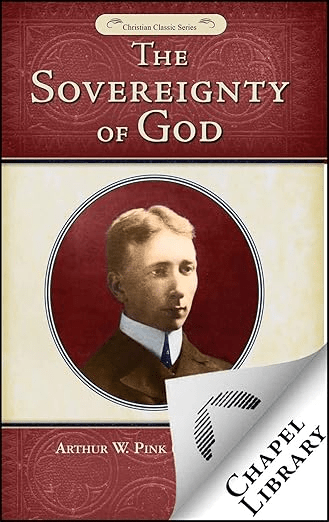
“Beware of all who solicit money! There are few things we loathe more than to see those professing to be engaged in a work of faith soliciting money. We sincerely trust that many of these bogus ‘faith’ enterprises, which have for so long preyed upon a credulous public, will soon go out of business. The world will be no worse off, and God will be less dishonored.”
“I will not burden you, for I am not seeking what you have, but you.” 2 Corinthians 12:14
“Unlike so many, we do not peddle the Word of God for profit.” 2 Corinthians 2:17
Before I comment on the above quote in detail, I think a point of clarification is warranted. While I agree with Pink, in theory and in practice, there are instances when soliciting money is warranted. I never met A.W. Pink, but having read much of this collection of works, I think he would agree that asking for support for the Church, Christian missionaries, and Christian disaster relief efforts is not what he implies in the quote. There are many verses in the New Testament where God gives guidance on financially supporting ministers of the gospel. If you check them out, you will find the emphasis is the giver is not coerced.
There are three types of Christians when it comes to finances. As in the story above, one group is all about money; their motto (secretly) is ‘Show me the Benjamins.’ We have all seen them on TV spouting that nonsense of ‘just send $$$, and you will receive this bottle of magic blessing oil, and your troubles will be gone. If not oil, it is a prayer cloth or some other idol. More and more, these false preachers and teachers have become so emboldened that they skip the idol gift and ask no, demanding that you send a “love gift” for the privilege of listening to them. I call these folks the thieves.
The second group is those sitting in the pews, who toss in a fiver and occasionally a twenty-dollar bill when the offering plate is passed each month or week. They pay their worldly bill before their heavenly ones. That did not work out well for Ananias and Sapphira, Acts 5:1-11. I call these folks the deceivers.
Finally, we come to the last type of Christian dealing with finances. These are the people who, every month or week, store up their treasures in heaven by giving their minimum (tithe) to the church and often going above and beyond that to support missions and missionaries in God’s work. I call these people the faithful.
I know that many will disagree with this assessment, especially the last two. The age-old argument that “tithing” is not in the New Testament does not eliminate the New Testament command to support the church.
Remember, all that we have is just a loan from God.
Psalm 24:1 ESV A Psalm of David. The earth is the Lord’s and the fullness thereof, the world and those who dwell therein,
Deuteronomy 10:14 ESV Behold, to the Lord your God belong heaven and the heaven of heavens, the earth with all that is in it.
Colossians 1:16 ESV For by him all things were created, in heaven and on earth, visible and invisible, whether thrones or dominions or rulers or authorities—all things were created through him and for him.
If you really want to get folks to open their wallets, you should . . .
(Don Fortner)
“Son of man, prophesy against the shepherds of Israel; prophesy and say to them: This is what the Sovereign LORD says: Woe to the shepherds of Israel who only take care of themselves! Should not shepherds take care of the flock?” Ezekiel 34:2
While eating lunch at one of our favorite restaurants a few years ago, my wife and I could not help overhearing the conversation of two men sitting next to us. They were preachers. One was a young pastor. His guest was a middle-aged evangelist. I listened as the older man gave instructions to the younger man.
He talked about one trick and then another to get men and women to give their money, having special meetings to teach people to give, etc. Every word they spoke to one another was about how to get people’s money. Finally, the older preacher said, “If you really want to get folks to open their wallets, you should . . .“, and proceeded to suggests another method of religious thievery as the young pastor sat spell-bound before his advisor.
In the thirty or forty minutes it took us to eat, not one word was spoken about God, His Son, His glory, His grace, His salvation, or the souls of men. The whole conversation was about raising money!
Because it was a public place, and I was not a part of the conversation, I chose to say nothing; but I said to my wife, “I would like to say to that young man: If you will preach the free, saving grace of God in Christ three times a week to them, God’s people will give generously because they want to. You will not have to trick them to give.”
My abhorrence of such men is inexpressible. They are self-serving thieves! God’s people do not have to be tricked into opening their wallets, or talked into being generous; nor will they be threatened into tithing.
From: Grace Gems
DEVOTION
What Wealth Reveals
2 Chronicles 1:1–3:17; Titus 1:1–4; Psalm 91:1–16
“What would you do if you won the lottery?”
This question always seems to generate the same responses: There’s the person who devises an investment strategy, the dreamer who envisions ending global poverty, the individual who would travel the world, and the person who would buy the house, boat, or car they’ve always wanted.
These responses tell us something about each person’s character and what fulfills them. The root of these desires reveals something about how they perceive their identity in relationship to their culture, family, and God. They feel “in their identity” or “most themselves” when they pursue happiness, others’ happiness, or the things they want.
Solomon experiences an unexpected “wish” scenario. Like winning the lottery or being granted three wishes, Solomon’s response reveals what is important to him, the core of his identity, and how God responds to people who know what He desires. God says to the king, “Ask what I shall give to you” (2 Chr 1:7). Solomon replies with some of the most humble words ever spoken: “Now, give to me wisdom and knowledge that I may go out and come in before this people [an idiom for a type of leading], for who can judge this, your great people?” (2 Chr 1:10).
In response, God reminds Solomon of all the great things he passed up in this moment and how doing so showed his true character. As a result, God says that He will also bless Solomon with “wealth, possessions, and honor” (2 Chr 1:11–12). Solomon’s humility demonstrates what it looks like to have a godly identity that’s focused on others rather than ourselves. To combat selfishness, Paul regularly reminds himself and others that he is “a slave of God, and an apostle of Jesus Christ for the faith of the chosen of God and knowledge of the truth that is according to godliness” (Titus 1:1). He grounds his statement by testifying to God’s eternal work (Titus 1:2–4).
The difference between present gain and eternal gain is focus: Are we working toward the eternal good of God’s work or the temporal good of our own success? When we align ourselves with who God created us to be, our desires become His desires. Our thirst for gain is quenched by God—sometimes surprisingly. We, like Solomon and Paul, should understand our role in God’s work and request what we need to fulfill that role, trusting that He will provide the rest.
What would you do if you came into a large sum of money? How can you align your desires with God’s?
JOHN D. BARRY
John D. Barry and Rebecca Kruyswijk, Connect the Testaments: A One-Year Daily Devotional with Bible Reading Plan (Bellingham, WA: Lexham Press, 2012).
STUDY
Discover more from Faithful Steward Ministries and FSM Women's Outreach
Subscribe to get the latest posts sent to your email.

