
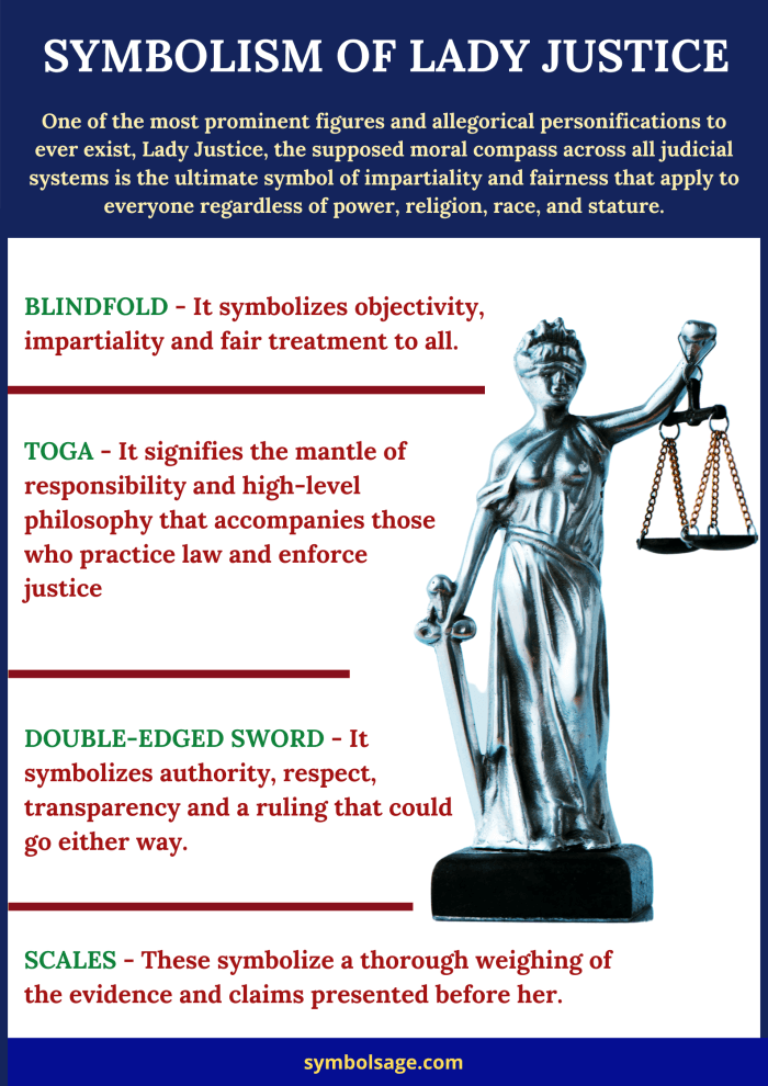
As Christians, when we think about the law, the first thing that should come to mind is the Ten Commandments, not Lady Justice or the latest TV crime drama. In today’s devotional, the Colson Center discusses the foundation for the Law of the land. How can someone bring a charge against another if the court has no moral or ethical standards? I think the following two quotes illustrate my point well:

“Education without values, as useful as it is, seems rather to make man a more clever devil.”
― C.S. Lewis

“The word ‘good’ has many meanings. For example, if a man were to shoot his grandmother at a range of five hundred yards, I should call him a good shot, but not necessarily a good man.”
― G.K. Chesterton
C.S. Lewis reminds us that all the education in the world does not make a better man. In the second quote, Chesterton uses an absurd example of shooting your grandmother to show that “good” is totally subjective unless defined before any action.
Every nation, state, or jurisdiction has to have Laws. These laws need to be written and based upon a set of Ethical, legal, and moral standards. When this no longer applies, we fall into chaos.
DEVOTION

On a recent episode of The Daily podcast, New York Times legal expert Charlie Savage, while discussing President Trump’s capture of Venezuelan dictator Nicolas Maduro, said, “There are two types of law: international law and domestic law.” Continued at the link above.
STUDY
law and gospel. This phrase describes the relationship between the Old Testament—more specifically, the will of God as communicated in the Torah and Ten Commandments—and the New Testament and the good news of Jesus. Historically, *Lutheran theology favors a more distinct division between condemnatory law and justifying gospel, whereas *Reformed theology emphasizes a positive third use of the law for Christians under the gospel, whereby the law does not simply show us our sin but also helps us know how to live our lives before the holy God. Furthermore, whereas Reformed theologians make this distinction, many also recognize that the law itself is a gift, and thus God’s grace precedes the law and enables both freedom from the law’s curse and the ability to obey.
Pocket Dictionary of the Reformed Tradition, p 68
CHAOS: Transliteration of the Greek word. In the OT, several Hebrew words convey the idea meaning emptiness, waste, desolation, and void. Hebrew verbs denote sinking into obscurity, becoming nothingness, or falling prey to weakness. In Isa. 24:10 God announced judgment on the whole earth. This included breaking down the city of. chaos so that no one could enter. Through God’s power the line of desolation and the plumb line of emptiness are stretched over Edom (Isa. 34:11). In Jer. 4:23–26 the land is described as desolate, formless, void, and without light, a wilderness unfit for habitation. En route to Canaan, God cared for Israel in a howling wilderness waste (Deut. 32:10). God’s power caused mighty leaders and princes to wander in the pathless wastes (Job 12:24; Ps. 107:40). Job compared his friends to waterless riverbeds that had lost themselves in nothingness (Job 6:18). Later Job longed for a place of deep shadow, of utter gloom without order (Job 10:21–22).
In Hebrew thought, however, the most prominent concept of chaos is that of the primeval disorder that preceded God’s creative activity. When “darkness was over the surface of the deep” (Gen. 1:2 NASB), God through His word destroyed the forces of confusion.
Throughout the Scriptures chaos is personified as the principal opponent of God. In ancient Semitic legends, a terrible chaos-monster was called Rahab (the proud one), or Leviathan (the twisting dragon-creature), or Yam (the roaring sea). While vehemently denouncing idolatry and unmistakably proclaiming the matchless power of the One Almighty God, biblical writers did not hesitate to draw upon these prevalent pagan images to add vividness and color to their messages, trusting that their Israelite hearers would understand the truths presented.
God demonstrated His power in creation graphically in the crushing defeat of chaos. He quieted the sea, shattering Rahab, making the heavens fair, and piercing the fleeing serpent (Job 26:12–13). His victory over Leviathan is well-known (Job 41:1–8; Isa. 27:1); Leviathan and the sea are at His command (Ps. 104:26). In creation He curbed the unruly sea and locked it into its boundaries (Job 38:1–11). He stretched out the heavens and trampled the back of Yam, the sea (Job 9:8).
A second use of the chaos-monster figure involved God’s victories at the time of the exodus, using the term Rahab as a nickname for Egypt. Through His power God divided the sea and crushed Leviathan (Ps. 74:13–14). He calmed the swelling sea and smashed Rahab like a carcass (Ps. 89:9–10). By slaying the monster Rahab, God allowed the people to pass through the barrier sea (Isa. 51:9–10). Mockingly, Isaiah called Egypt a helpless, vain Rahab whom God exterminated (Isa. 30:7). The psalmist anticipated the day when Rahab and Babylon would be forced to recognize God’s rule (Ps. 87:4). In Ezek. 29:3; 32:2, the Pharaoh of Egypt is called the river monster that will be defeated at God’s will.
Thirdly, the chaos theme is implied, if not used, in the NT depicting God’s victory in Christ. In the Gospels Christ confidently demonstrated mastery over the sea (Mark 4:35–41; 6:45–52; John 6:16–21). In Revelation, when the ancient serpent, personified as the satanic dragon, rises out of the sea challenging His kingdom, Christ utterly defeats the adversary forever.
So, beginning with Gen. 1:2, when God conquered the formless waste, and continuing through all the Scriptures, God’s mighty power over chaos is shown repeatedly. Finally, the triumphal note is sounded in Rev. 21:1, “the sea existed no longer.” A new heaven and new earth are proof once again that chaos is conquered!
Alvin O. Collins, “Chaos,” in Holman Illustrated Bible Dictionary, ed. Chad Brand et al. (Nashville, TN: Holman Bible Publishers, 2003), 277–278.
Ethics. The study of human character and behavior. This discipline was not generally distinguished from other areas of Christian thought until the Enlightenment. The Reformers viewed *good works and *sanctification as the Spirit-enabled response to *justification by faith, with instruction for holy living based on the will of God in Scripture. In contrast to tendencies in *Luther, *Calvin held a more positive view of the *law and derived ethical guidelines from Scripture, *tradition and *general revelation within the framework of *sola scriptura. In addition to emphasizing *piety as a response to God’s sovereign *salvation, the Reformed tradition also tends to situate ethics within the context of redemptive history, whether focusing on creation like *Kuyper and the *neo-Calvinists, emphasizing redemption and the command of God like *Barth, or placing ethics within the whole context of *covenant theology. Although Christian ethics has become a separate discipline in modern academics, the Reformed perspective maintains inseparable links between ethics, *doctrine, *liturgy and everyday life.
Kelly M. Kapic and Wesley Vander Lugt, Pocket Dictionary of the Reformed Tradition, The IVP Pocket Reference Series (Downers Grove, IL: IVP Academic, 2013), 49.
Discover more from Faithful Steward Ministries and FSM Women's Outreach
Subscribe to get the latest posts sent to your email.
 Faithful Steward Ministries and FSM Women's Outreach