
Everyone wants to be happy, God has a plan for that.
This blessed Psalm is so directly applied, under the influence of God the Holy Ghost, by the apostles Peter and Paul, to the person and work of the Lord Jesus, that we must wholly overlook David the writer of it, (except considering him as a prophet,) so as not to lose the great object intended by it, in supposing that ought of David is meant by what this Psalm contains. Here Christ, and his faith in covenant engagements, are beautifully set forth.
Robert Hawker, Poor Man’s Old Testament Commentary: Job–Psalms, vol. 4 (Bellingham, WA: Logos Bible Software, 2013), 205.
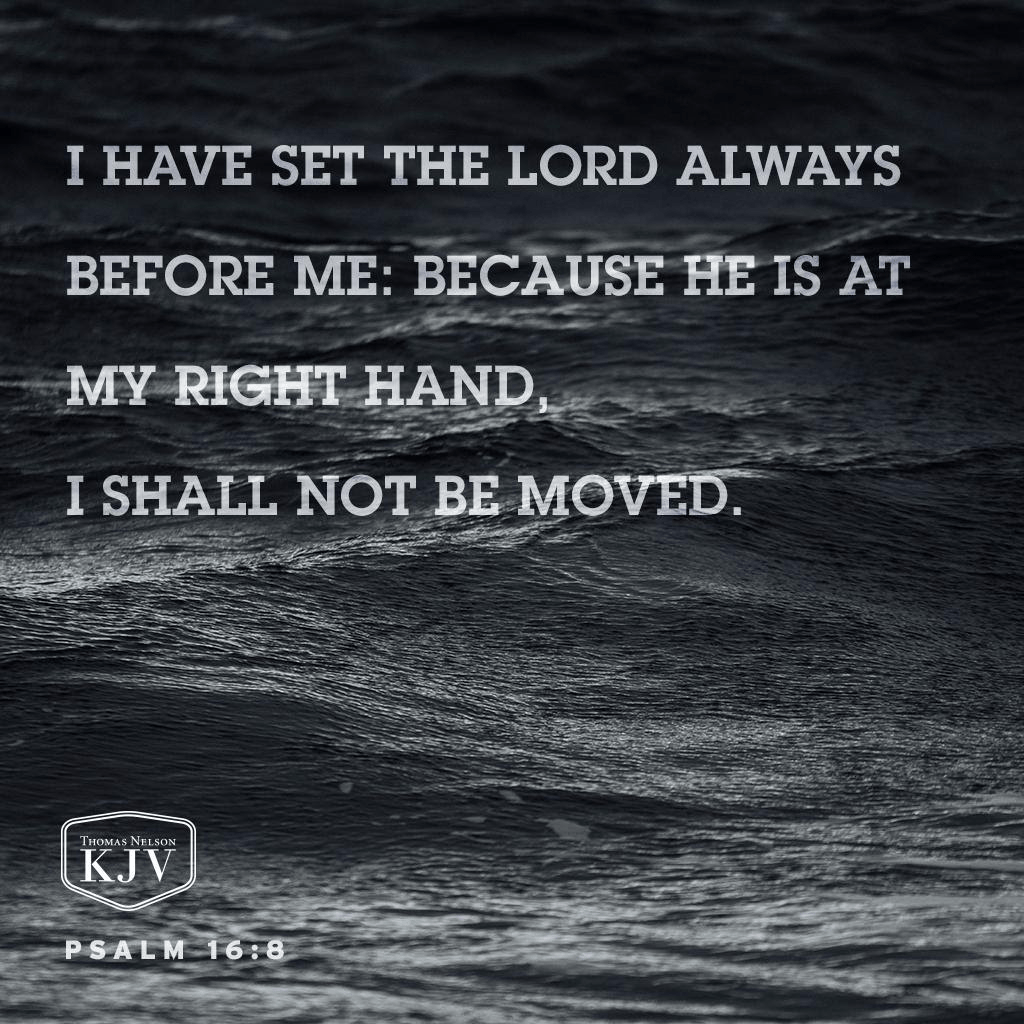
Ver. 8. I have set the Lord always before me, &c.] Not his fear only, or the book of the law, as Jarchi interprets it, but the Lord himself; or, I foresaw the Lord always before my face, Acts 2:26. as Christ is set before men in the Gospel, to look unto as the object of faith and hope, to trust in and depend upon for life and salvation; so Jehovah the Father is the object which Christ set before him, and looked unto in the whole course of his life here on earth; he had always an eye to his glory, as the ultimate end of all his actions; and to his will, his orders, and commands, as the rule of them; and to his purposes, and counsel, and covenant, to accomplish them; and to his power, truth, and faithfulnes, to assist, support, and encourage him in all his difficulties and most distressed circumstances. Because he is at my right hand; to counsel and instruct, to help, protect, and defend: the phrase is expressive of the nearness of God to Christ, his presence with him, and readiness to assist and stand by him against all his enemies; see Psal. 109:31 and 110:5 and 121:5. so the Targum paraphrases it, because his Shechinah rests upon me. I shall not be moved: as he was not from his place and nation, from the duty of his office, and the execution of it, by all the threats and menaces of men; nor from the fear, worship, and service of God, by all the temptations of Satan; nor from the cause of his people he had espoused, by all the terrors of death, the flaming sword of justice, and the wrath of God; but, in the midst and view of all, stood unshaken and unmoved; see Isa. 42:4 and 50:5–9.
John Gill, An Exposition of the Old Testament, vol. 3, The Baptist Commentary Series (London: Mathews and Leigh, 1810), 584.
SERMON
Discover more from Faithful Steward Ministries and FSM Women's Outreach
Subscribe to get the latest posts sent to your email.
 Faithful Steward Ministries and FSM Women's Outreach