
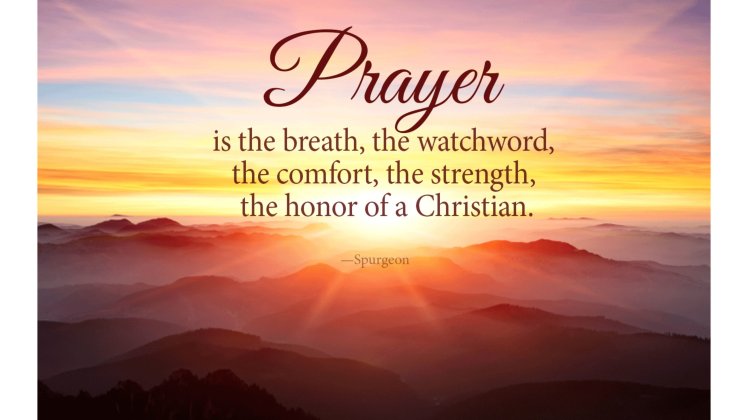
We continue our series of excerpts from “Matthew Henry on a Practical Method of Daily Prayer.”1 These will be without the usual comments and study references. My hope is that people will be like the Bereans, as described in Acts 17:11, and will put Henry’s writing to the test.
In beginning a time of prayer, Henry advised directing prayers with “a fixedness of thought, and a close application of mind,” like an archer shooting an arrow with a steady hand and an eye fixed on his target. The target of our prayers is always “God’s glory, and our own true happiness,” which, Henry cheerfully reminded us, God has been pleased to “twist” together into one indivisible object in the covenant of grace, “so that in seeking his glory, we really and effectually seek our own true interests.” Just as a shooter aims with one eye while shutting the other, so in prayer we must “gather in our wandering thoughts.” When you pray, close your eye to the glory and praise of men (Matt. 6:2) and the glitter and honors of this world (Hos. 7:14). In light of the first three petitions of the Lord’s Prayer, Henry wrote:
Let not self, carnal self, be the spring and centre of your prayers, but God; let the eye of the soul be fixed upon him as your highest end in all your applications to him; let this be the habitual disposition of your souls, to be to your God for a name and a praise; and let this be your design in all your desires, that God may be glorified, and by this let them all be directed, determined, sanctified, and, when need is, overruled.
Just as a letter must be properly addressed to reach its intended recipient, so our prayers must be addressed to God. Henry wrote, “Give him his titles, as you do, when you direct to a person of honour.… Direct your prayer to him as the God of glory with whom is terrible majesty, and whose greatness is unsearchable.” Do not forget also that sweet name which Christ taught us to use in prayer, “Our Father who art in heaven.” Then take your letter and put it in the hand of “the Lord Jesus, the only Mediator between God and man … and he will deliver it with care and speed, and will make our service acceptable.”
David testified in Psalm 5:3 that the morning hours are especially good for prayer. Likewise, Henry observed that the priests offered a sacrificial lamb and burned incense every morning (Ex. 29:39; 30:7), and singers thanked the Lord every morning (1 Chron. 23:30). He cited these examples to indicate that all Christians, who are spiritual priests in Christ, should offer spiritual sacrifices every morning to God. God, who is Alpha (Rev. 1:11), requires our first-fruits; therefore, we should give Him the first part of our day. God deserves our best, not just leftovers of the day when we are tired and worn out. Henry wrote, “In the morning we are most free from company and business, and ordinarily have the best opportunity for solitude.”15 God gives us fresh mercies every morning, so we should give Him fresh thanksgivings and fresh meditations on His beauties. In the morning, as we prepare for the work of the day, let us commit it all to God. Begin every day with God.
Joel R. Beeke, “Matthew Henry on a Practical Method of Daily Prayer,” in Taking Hold of God: Reformed and Puritan Perspectives on Prayer, ed. Brian G. Najapfour (Grand Rapids, MI: Reformation Heritage Books, 2011), 145–146.
Discover more from Faithful Steward Ministries and FSM Women's Outreach
Subscribe to get the latest posts sent to your email.
 Faithful Steward Ministries and FSM Women's Outreach
Amen
Starting each morning with God, offering our first thoughts and actions to Him, helps align our day with His will. Trusting Jesus as our mediator, our prayers rise to God with care and love. 🙏
LikeLiked by 1 person