
QUOTES
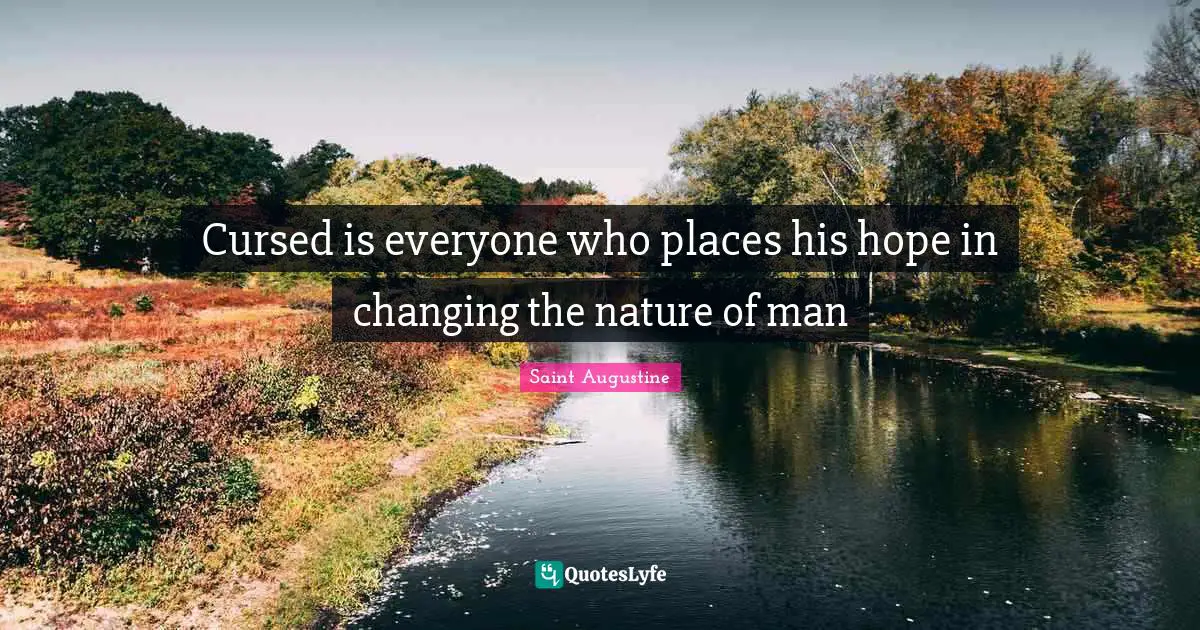
God is more anxious to bestow his blessings on us than we are to receive them.
—Augustine (354-430), bishop of Hippo
Bible Truth Behind the Quote:
God seeks to shower blessings on His people (Psalm 144:15). Moreover, God is “able to do far more abundantly than all that we ask or think” (Ephesians 3:20) and stands ready to do so.
Ron Rhodes, 1001 Unforgettable Quotes about God, Faith, & the Bible (Eugene, OR: Harvest House Publishers, 2011).
TODAY’S TEXT
26Behold, I set before you this day a blessing and a curse; 27A blessing, if ye obey the commandments of the LORD your God, which I command you this day: 28And a curse, if ye will not obey the commandments of the LORD your God, but turn aside out of the way which I command you this day, to go after other gods, which ye have not known. – Deut 11:26-28
STUDY
Deuteronomy Chapter 11, Summary
11:26 The curse in view here is certainly not the use of profanity or anything of the kind but is the technical language of covenant relationship. Blessing comes by obedience, and cursing by disobedience. Disobedience resulted in such things as illness, lack of rain, loss of harvest, deportation, or even death. Curses are not arbitrary and capricious acts of God but the penalty for violating a pledge made by the people themselves (see 28:1–68; Ex 19:8; 24:3, 7).
Eugene H. Merrill, “Deuteronomy,” in CSB Apologetics Study Bible, ed. Ted Cabal (Nashville, TN: Holman Bible Publishers, 2017), 228.
Blessing and curse (11:26–32) In 11:26–28, Moses sets out the basic covenantal dynamic: obedience results in blessing, but disobedience results in curse. This ‘theology of recompense’ demonstrates the conditionality of the Horeb covenant. While Israel’s existence as a nation is due to Yahweh’s gracious saving acts, Israel’s ongoing existence in the land is dependent on obedience. There can be no ‘resting on laurels’. The nation has to be deliberate in its remembrance of the past and its resolve to obey Yahweh’s laws. This is why Moses directs the nation to enact a blessing and cursing ceremony after entering the land (11:29–32). It was to occur on Mount Gerizim and on Mount Ebal—two large hills in the centre of Canaan.
The details of the blessing and curse are explained in finer detail in Deuteronomy 27:11–28:68. Reciting blessings and curses liturgically in the ancient world served two purposes. First, the spoken word was deemed to make the blessings and curses effective. We might draw an analogy with the opening ceremony of a modern Olympic Games. In a display of unity all the national teams assemble together inside a stadium to hear the words that declare the games, in which they will compete, officially open. In a similar manner, Israel was to assemble together and speak the words that officially made covenant life active within the land. The second purpose was to pledge the nation formally to the covenant dynamic. Again, the Olympic Games analogy helps illustrate the point. Olympic athletes train hard for the Games and then, during the opening ceremony, take an oath to compete by the rules. In a similar way, Israel’s time in the desert prepared the people for life in the land. Once installed in the land, they were to pledge themselves to the covenant dynamic, understanding their responsibility towards the covenant and the consequences for breaching it.
George Athas, Deuteronomy: One Nation under God, ed. Paul Barnett, Reading the Bible Today Series (Sydney, South NSW: Aquila Press, 2016), 152–153.
26–32. It is truly refreshing to attend to the practical exhortation which Moses makes, from what he had before said on this interesting subject, if interpreted upon gospel principles. There is indeed a blessing and a curse set before us in the gospel of Jesus. And if any man like the Jews of old, is at a loss to discover on whom the whole blessing rests, and the curse of rejecting; and would ask as they did of Jesus, What shall we do that we might work the works of God: the Redeemer hath himself answered it; “This is the work of God that ye believe in him whom he hath sent.” John 6:28, 29.
REFLECTIONS; DEAREST Jesus! be thou everlastingly adored for all the great things which mine, eyes have seen of thy wonders of grace, in the rescue of thy people from more than Egyptian bondage in sin and death. Oh! give me yet more and more to see and know my vast privileges, and be ever ready to ascribe the whole where alone it is due, to thine arm, and thy power, which alone bringeth salvation.
Oh, for an ardent zeal to be looking for that city of Canaan whither thou art gone before. Blessed Jesus! may the recollection that thou art there, prompt my soul to be sending forth its warmest affections and desires after the attaimnent of it, knowing that while I am present in the body I am absent from the Lord.
And do thou, Holy Spirit, whose grace and influence alone can effectually direct and incline my heart to a right judgment in all things, do thou sweetly constrain my soul into the love of God and into the patient waiting for Jesus Christ; that while thy servant is here setting before me, the blessing and the curse, life and death, and good and evil: Jesus himself who is the sum and substance of all blessings, all mercies, all good, may be my choice and my portion for ever.
Robert Hawker, Poor Man’s Old Testament Commentary: Deuteronomy–2 Samuel, vol. 2 (Bellingham, WA: Logos Bible Software, 2013), 64–65.
- Behold, I set before you this day. He now embraces the two points at once, viz., that they would be blessed if they earnestly apply themselves to the keeping of the Law, and cursed, if they shake off its yoke and revel in their lusts. But, when he says that he here sets before them a blessing and a curse, it is as much as to declare, that he does not merely tell them what is right, but that the reward is prepared if they obey; and if not, that the punishment is also at hand. Thus we see, that the doctrine which he had hitherto delivered is sealed by hope and fear, since they would not lose their labour if they obeyed it, nor be unpunished if they rejected it. But, that they may learn surely to embrace the promises and to fear the threatenings, he repeats what we have met with before, that God, who is both a faithful rewarder, and a severe judge, is the Author of the Law; yet at the same time he magnifies his own ministry,2 since it behoved them to depend upon God, and to acquiesce in His commandments, in such a manner as still to submit themselves to His Prophet. For such is men’s pride, that they desire to fly above the clouds to listen to God; whilst He would be heard in His servants, by whose mouth He speaks. Moses, therefore, would again enforce upon them this humility, when he states that he enjoins what God has commanded, as if to call himself the organ of the Holy Spirit.
- And it shall come to pass, when the Lord. I have lately expounded a similar passage, which, although it is subsequent in the order observed by Moses, yet, inasmuch as it sets out the matter more clearly, I have not hesitated for perspicuity’s sake to put first. I said that God’s intention was, whilst appointing the Israelites to proclaim their own condemnation, to lay them under more solemn obligation to keep the Law. If He had Himself declared His will through the Levites only, they ought indeed to have been seriously affected, and to have listened with reverence both to the blessings and the curses; but when each of them testifies with his own mouth what the Levites dictated by God’s command, the introduction of this assent, as a solemn ratification, was more efficacious in awakening their zeal and attention. A more fitting season, however, for this protest was after they had entered the promised land than as if it had been made in the plain of Moab; for the sight of the land tended to its confirmation, as if they had been brought into court to make a covenant with God.
These two mountains are situated opposite to each other, in such a manner that the two divisions of the people might easily stand to bless and to curse, so that they might in concert approve of the promises and threats of God. - Are they not on the other side of Jordan. Although the form of interrogation is common in Hebrew, yet in this place Moses affirms more vehemently than as if he had only stated directly that these mountains were in the land of Canaan; for he wishes to encourage them in the confidence of entering the promised inheritance; just as he adds immediately afterwards, “Ye shall pass over Jordan.” For, although they had already experienced the miraculous power of God in the conquest of the Amorites, and in their occupation of the land of Bashan, yet such was their incredulity, that it was necessary constantly to dissipate their fears, so that they might lay aside all hesitation, and boldly prepare to advance. Finally, he founds an exhortation upon this great goodness of God; for the actual enjoyment of the land ought to have stimulated them the more in the service of God, because they were made to inherit it for the purpose of keeping the Law.
John Calvin and Charles William Bingham, Commentaries on the Four Last Books of Moses Arranged in the Form of a Harmony, vol. 3 (Bellingham, WA: Logos Bible Software, 2010), 210–211.
DEVOTIONAL
Deuteronomy 11:26-32 ~ Warnings and Invitations
Discover more from Faithful Steward Ministries and FSM Women's Outreach
Subscribe to get the latest posts sent to your email.
 Faithful Steward Ministries and FSM Women's Outreach