
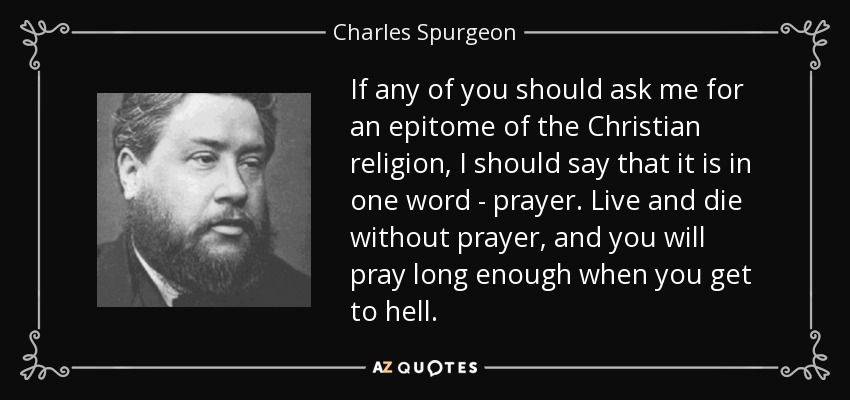
Prayer. The activity of bringing all our desires and thanksgiving to God with full humility and submission to his will, confident that God will hear and respond. Understood in this way, prayer is directed to God through Christ and by the Spirit, rather than through confession to priests or prayers to *saints. There is a strong emphasis in the Reformed tradition on using Scripture as a model for prayer, exemplified in the psalms, and the Lord’s Prayer, while also encouraging great variety in prayer as either spontaneous or structured, corporate or individual. Reformed theologians recognize a profound mystery at the heart of prayer as the instrumental means by which God works out his sovereign will and *providence.
Kelly M. Kapic and Wesley Vander Lugt, Pocket Dictionary of the Reformed Tradition, The IVP Pocket Reference Series (Downers Grove, IL: IVP Academic, 2013), 88.

MATTHEW 5:44 and 45
CONTEXT:
OVERVIEW: As the crowds gathered to receive his teaching, preaching, and healing ministry, Jesus ascends the hill and begins to teach. Commentators set the context for the Sermon on the Mount by saying that Jesus’ chief purpose is to contend against the external righteousness of the Pharisees by addressing the hearts of the people. Many comments on the Beatitudes are embedded in Reformation sermons that focus on the Christian virtues of poverty of spirit, godly mourning, and meekness as in keeping with the gospel. In other words, the virtues extolled are kingdom virtues and all the blessings are essentially tied to the kingdom. Those desiring entrance (“hunger and thirst for righteousness”) into the kingdom must be poor in spirit, mourn (penitent), gentle, and pure in heart. Having received the kingdom, their lives will reflect mercy and peace even in the midst of persecution and insults.
The reformers assert that Jesus’ teaching on persecution protects believers from a version of the gospel that rejects the reality of suffering. Because of their faith in the gospel, believers will be tested as they face hardships from those who reject the gospel and would love to see it silenced. Jesus prepares his disciples to receive this persecution as a blessing of their relationship and status as children of God by faith. Calvin specifically notes that Jesus’ preparation of his disciples was to result in their courage when facing persecution. To the reformers, the frequent warnings about persecution and the teachings on the blessing of it should indicate that persecution is a normal feature of the Christian experience.
Jason K. Lee, William M. Marsh, and Timothy George, eds., Matthew: New Testament, vol. I, Reformation Commentary on Scripture (Downers Grove, IL: IVP Academic: An Imprint of InterVarsity Press, 2021), 57.
Christ beginneth his sermon upon the mount, declaring who are blessed, 1–12. He calleth his disciples the salt of the earth, the light of the world; and by the similitudes of a city on a hill, and of a candle, he urgeth upon them the necessity of setting a good example, 13–16. He came not to destroy, but to fulfil, the law, 17–20. He extendeth the precepts against murder, 21–26. adultery, 27–32, and false swearing, 33–37: exhorteth to suffer wrong patiently, 38–42; to love our enemies, 43–47; and to aim at perfection, 48.
Matthew Poole, Annotations upon the Holy Bible, vol. 3 (New York: Robert Carter and Brothers, 1853), 20.
v.44 – But I say unto you, Love your enemies, bless them that curse you, do good to them that hate you, and pray for them which despitefully use you, and persecute you;
That this is no counsel of perfection, (as the papists would have it,) nor any new precept added to the law of God, (as the Socinians would have it,) is plain from Prov. 25:21, where we find it commanded under the Old Testament. Neither is it, I advise you, but, I say unto you, which argueth a command. Love here doth not signify the complacency of the heart in an object, which is love in the strict sense; but, Be charitable unto, do good to your enemies: nor are we equally obliged to do good to our enemies as to our friends; but it is expounded by the following words, and to be understood, 1. Of not seeking unlawful private revenge. Bless them that curse you: do not return reviling for reviling, while they curse do you bless. 2. Doing them common offices of kindness. If thine enemy hunger, feed him; if he thirst, give him to drink, Rom. 12:20. This is a doing good to them that hate us, relieving them in their pressing necessities. 3. Doing them all the good we can for their souls. Pray for them which despitefully use you, and persecute you. So did our Saviour, Luke 23:34, and Stephen, Acts 7:60; so did David, Psal. 35:13–15. In the mean time we may hate those who are God’s enemies, as such, Psal. 139:21, 22; and for such we may seek a due revenge of God’s honour upon them. And for our enemies, this precept prohibits not the seeking of a just satisfaction for wrongs done unto us in a way of public justice, yet not without a mixture of charity.
v.45 That ye may be the children of your Father which is in heaven: for he maketh his sun to rise on the evil and on the good, and sendeth rain on the just and on the unjust.
As your heavenly Father hath a common love, which he extendeth to all mankind, in supplying their necessities, with the light and warmth of the sun, and with the rain; as well as a special love and favour, which he exerciseth only toward those that are good, and members of Christ; so ought you to have: though you are not obliged to take your enemies into your bosom, yet you ought to love them in their order. And as your heavenly Father, though he will one day have a satisfaction from sinners, for the wrong done to his majesty, unless they repent; yet, to heap coals of fire on their heads, gives them good things of common providence, that he might not leave them without witness, yea, and affords them the outward means of grace for their souls: so, although you are bound to seek some satisfaction for God’s honour and glory from flagitious sinners, and though you may in an orderly course seek a moderate satisfaction for the wrong done to yourselves, yet you ought to love them with a love consistent with these things; that so you may imitate your heavenly Father, and approve yourselves to be his children.
Matthew Poole, Annotations upon the Holy Bible, vol. 3 (New York: Robert Carter and Brothers, 1853), 26.
Here is John Gill’s Commentary on v.44-45
DEVOTIONAL
The Excellency of Prayer! (By William Huntington, in a letter to a friend)

Note from the Editors: The following preface accompanied the initial publication of “A Method for Prayer.” It was written by Matthew Henry on March 25, 1710. For ease of reading, we have sought to update some of the author’s language.
Discover more from Faithful Steward Ministries and FSM Women's Outreach
Subscribe to get the latest posts sent to your email.
 Faithful Steward Ministries and FSM Women's Outreach