
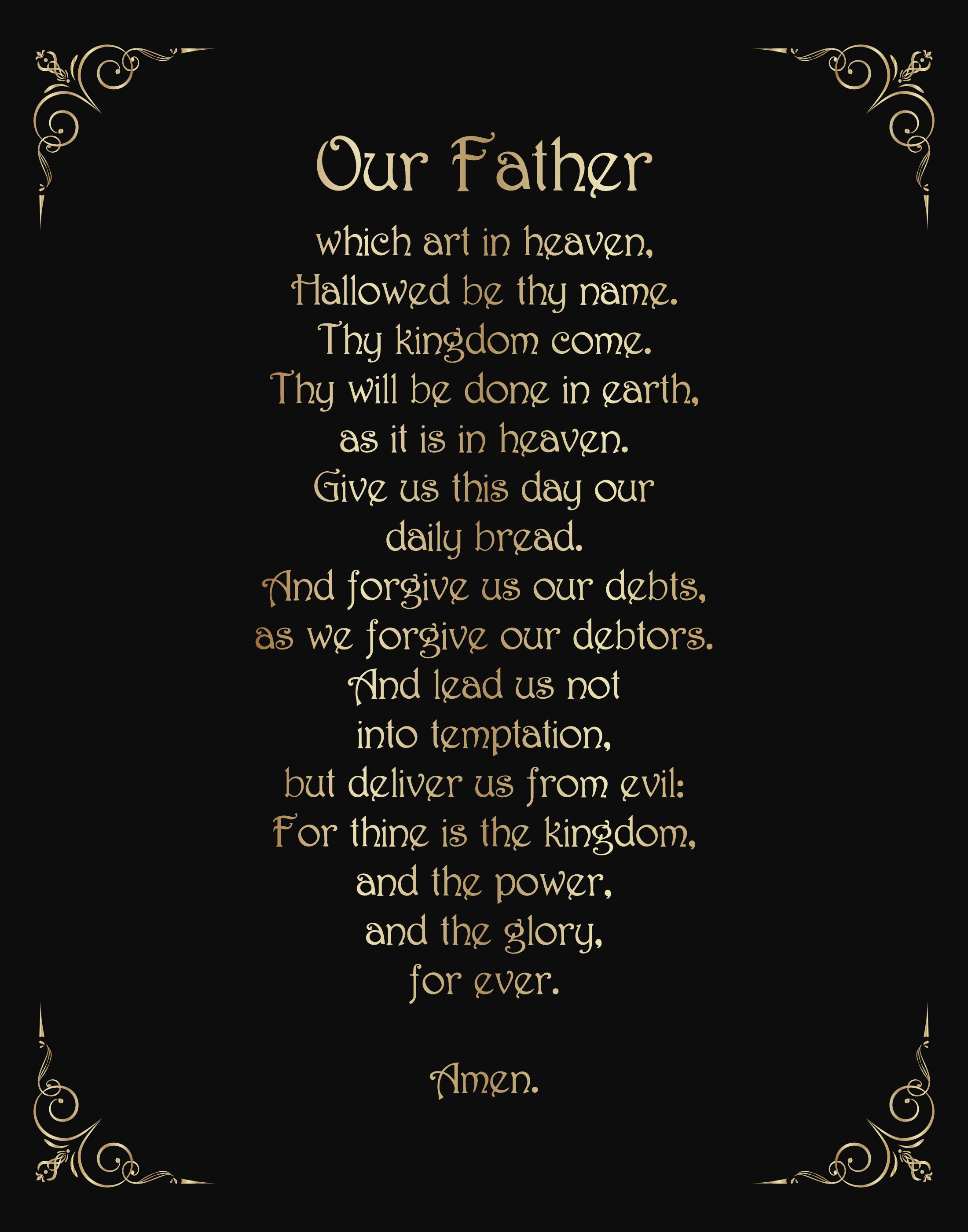
Today, we will take an in-depth look at what is commonly called the Lord’s Prayer, or for those who insist, the Model Prayer. Our study will be from the perspective of Thomas Boston, a late 17th- and early 18th-century Puritan stalwart.1 Boston, and for that matter, every Putitan that I have read, never had an issue calling this the Lord’s Prayer. They attributed it to the Lord Jesus Christ, not about Him. Here, Boston, in that poetic language of the era, walks us through each phrase of the prayer, expounding upon a central theme of Adoption.
TEXT
INTRODUCTION
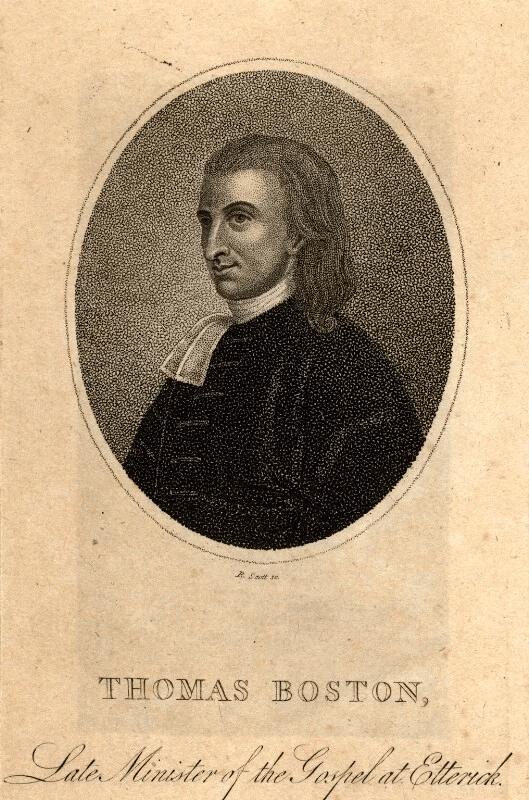
Thomas Boston on Praying to Our Father
The Spirit of Christ presses forward the elect and determines them to seek to be received into the family of God. —THOMAS BOSTON
Thomas Boston (1676–1732) rose to prominence as a minister of the Church of Scotland and a prolific theological writer. Converted under the preaching of Henry Erskine, father of Ebenezer and Ralph Erskine, Boston served two congregations, first in the parish of Simprin (1699–1707), then in the parish of Ettrick (1707–1732). Boston mastered the classical languages as well as French and Dutch.
Though he was an able linguist, theologian, and author, Boston did not seek the limelight. He did not teach in a university, but his books and published sermons were great commentaries on Christian theology. An Illustration of the Doctrines of the Christian Religion is one of the best expositions of the Westminster Shorter Catechism ever published. His Human Nature and Its Fourfold State, published in Edinburgh in 1720, is a classic that traces the human condition through four states: man’s original state of righteousness or innocence, man as a fallen creature, man as a redeemed and regenerated being, and man in the eternal state of heaven or hell.
Boston experienced many sorrows in life. He lost his mother when he was fifteen and his father a decade later, shortly after Boston settled in Simprin. He discovered that people there were ignorant of spiritual truths and negligent in family worship. In Simprin, Boston married Catherine Brown, fifth daughter of Robert Brown of Barhill, Clackmannan. Boston saw “sparkles of grace” in her. He considered marriage a gift of the Lord, even though his wife suffered frequent bouts of acute depression and insanity; from 1720 on, she was often confined to an apartment, “the inner prison,” where Boston says she was “an easy target for Satan’s onslaughts, both concerning her assurance of salvation and her peace with God.” He buried six of their ten children, two in Simprin and four at Ettrick. His first ten years of ministry at Ettrick were a long season of plowing with little yield. His advocacy of the free grace of God put him at the center of a grievous controversy in his denomination.5 Then, too, Boston often suffered acute physical pain and weakness. Yet he endured such trials cheerfully in submission to a loving heavenly Father.
Spiritual discipline was essential to the ministry, Boston believed, so he rose early each Monday and devoted hours to prayer and reflection. He also devoted time to prayer throughout the week. On nearly every page of his autobiography, Boston says he laid one matter or another before the Lord in prayer. He also established regular times for fasting and communion with God. “When his congregation saw him enter the pulpit on the morning of the Lord’s Day, they knew they were looking into the face of one who had just come forth from intimate communion with God, and who at once was God’s ambassador and their friend,” wrote Andrew Thomson. By the time Boston died, his name was a virtual synonym in Scotland for holiness of life. D. D. F. MacDonald said Boston’s preaching “did more to fan the flame of true piety in Scotland than any other single minister in his generation.”7
Central to Thomas Boston’s view of prayer is the doctrine of adoption. The Puritans in England and Scotland made much of adoption; they were the first group to incorporate an article on adoption into a Reformed confession of faith (Westminster Confession of Faith, chapter 12). Boston traced the development of the doctrine of our adoption by God as His children into the doctrine of prayer to God as our Father. He taught that adoption is the foundation of prayer, and prayer is the fruition of adoption.
Joel R. Beeke, “Thomas Boston on Praying to Our Father,” in Taking Hold of God: Reformed and Puritan Perspectives on Prayer, ed. Brian G. Najapfour (Grand Rapids, MI: Reformation Heritage Books, 2011), 159–161.
STUDY
- Beeke, Joel R. “Thomas Boston on Praying to Our Father.” In Taking Hold of God: Reformed and Puritan Perspectives on Prayer, edited by Brian G. Najapfour. Grand Rapids, MI: Reformation Heritage Books, 2011. ↩︎
ADDITIONAL RESOURCES
Rob Ventura, in his article A Confessional View of Adoption, states the following:
The Applications of Adoption
Following the reality of the privileges and promises we have as children of God, there are several principles we must apply if we would grow in greater awareness of our adoption as God’s children:
- We must regularly reflect on this stunning teaching of Scripture and all that it means for us personally.
- We must regularly recall what our new identity is as adopted sons or daughters of God and live in light of it.
- We must regularly resolve to love all the true people of God, who like us have been adopted by God.
- We must regularly reject the ways of the world, which belong to the children of the devil.
- We must regularly reach out to God in prayer, knowing that His ears are always open to our petitions.
- We must regularly rejoice, knowing that what awaits us in the eternal state is truly wonderful.
Book 3 – Chapter 11: Of the Spirit of Adoption – by Herman Witsius
The Economy of the Covenants Between God and Man by Herman Witsius
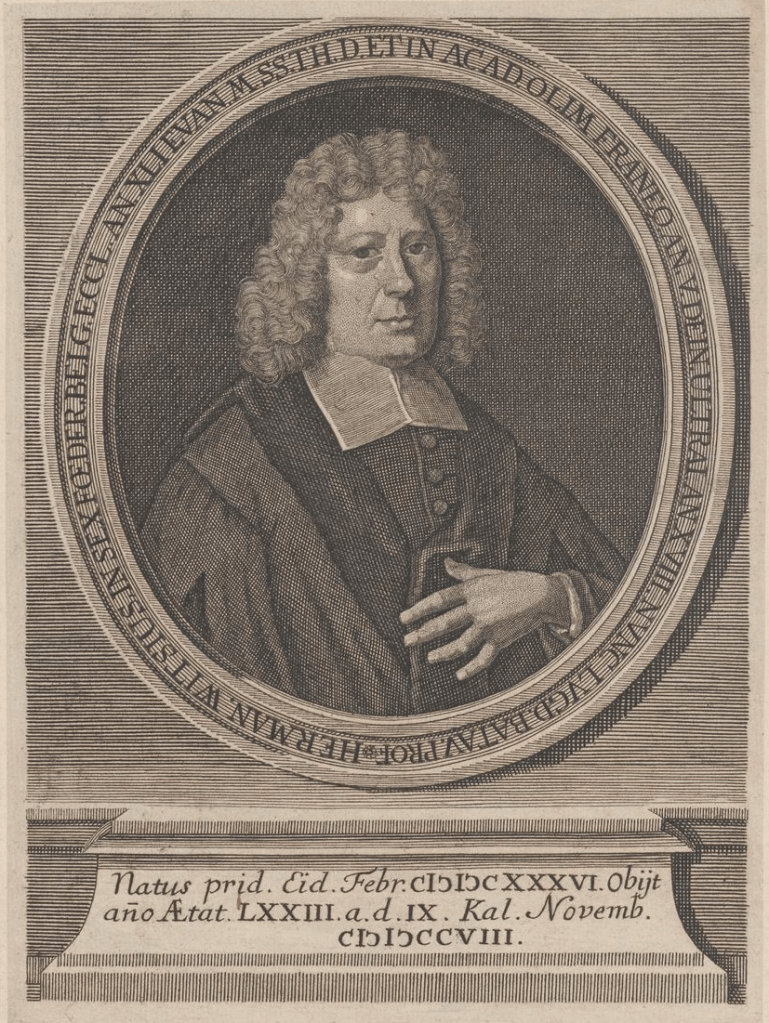
Herman Witsius (1636-1708)
Arguably known for the best work on Covenant Theology in print (at least in the top 5).
Herman Witsius (1636-1708) was Professor of Divinity in the Universities of Franeker, Utrecht, and Leyden. A brilliant and devout student, he was fluent in Latin, Greek, and Hebrew by the age of fifteen, when he entered the University of Utrecht. He was ordained at twenty-one and served in several pastorates, filling both the pulpit and the academic chair over the course of his life.
This, his magnum opus, is a reflection of some of the most fruitful and mature thinking on federal theology during the seventeenth century, and still holds a preeminent place in our own day.
By William S. Plumer, 1875
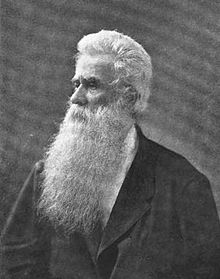
Plumer, William Swan, D.D., LL.D. (1802 – 1880)
A Presbyterian minister, was born at Greenssburg (now Darlington), Beaver County, Pennsylvania, July 26, 1802. He graduated from Washington College, Va., in 1825, and from Princeton Theological Seminary in 1827… Contineud @ source
RECOMMEND READING
Discover more from Faithful Steward Ministries and FSM Women's Outreach
Subscribe to get the latest posts sent to your email.
 Faithful Steward Ministries and FSM Women's Outreach