

And she went, and came, and gleaned in the field after the reapers: and her hap was to light on a part of the field belonging unto Boaz, who was of the kindred of Elimelech. (KJV)
COMMENTS and COMMENTARY
If you are a regular follower of this site you know that the sovereignty of God, is an often repeated topic. The devotional and study that follows is no exception. As many of us I have read through the Bible quite a few times (but never deep studied systematically through it) and I love that I can still be enlightened and suprised by knew insight on a regular basis. NO, I am not one of those “God told me…” I am speaking about when I do come across a gem in a portions of text and really study it.
Today’s devotional was part of my daily reading. It struck me when I read the words “her hap was,” that nothing really just happens. The writers of the KJV and most modern translations have trouble breaking down words to express God’s divine providence in action. So words like “hap (happen)” get misconstued by our meanings today. We must warn those who would believe in chance, fate, luck…, in turn, that they must by default, deny the sovereignty of God.
As we read the book of Ruth it is evident that God is at work in all that happens His divine hand of providence is ever present. Before Ruth and since that story line remains the same, “our hap was.” Not because of anything we dream up but because God in in controil of all.
Naomi had urge Ruth and her sister Orpah, to leave her and return to their homeland of Moab. Orpah, left but Ruth refused, why becasue God had a plan for her. Ruth recognized this in Chpater 1 when in verse 16 (AMP) she declares to Naomi (her mother-in-law), And Ruth said, Urge me not to leave you or to turn back from following you; for where you go I will go, and where you lodge I will lodge. Your people shall be my people and your God my God.
Reaping in the Fields of Boaz (2:1–23). The first verse of the chapter provides the setting for the narrative which follows, introducing Boaz, a wealthy relative of Elimelech.
Ruth volunteers to glean the fields, to follow the reapers and pick up the insignificant amounts left behind. Gleaners were also permitted to harvest the grain in the corners of the fields, a provision for the poor contained in Yahweh’s Law (Lv 19:9, 10).
She happens to come to the field of Boaz. As he visits this field, he notices Ruth, inquires about her, and learns her identity. His overseer reports that she has industriously worked the fields from early morning until that time. Boaz, attracted to her because of her loyalty and concern for Naomi, graciously makes additional provision for her. She is given a favored position in reaping, directly behind the main body of reapers. Further, she is to receive water which has been drawn for her by the young men—an unorthodox arrangement.
Ruth, falling before Boaz in a gesture of great humility and respect, asks why as a foreigner she should be accorded such favor. Boaz gives two reasons, her kindness to her mother-in-law, and her spiritual insight which led her to seek after Israel’s God, “under whose wings you have come to take refuge” (NEB).
She is also given a place at the reapers’ table and, upon Boaz’s orders, returns to the fields—this time to reap from the unharvested grain. At the end of the day she returns home to Naomi and tells her of the day’s events. Naomi informs Ruth that Boaz has the right of redemption. Ruth returns to his fields until the end of the harvest season.
Walter A. Elwell and Barry J. Beitzel, “Ruth, Book Of,” in Baker Encyclopedia of the Bible (Grand Rapids, MI: Baker Book House, 1988), 1872.
DEVOTION
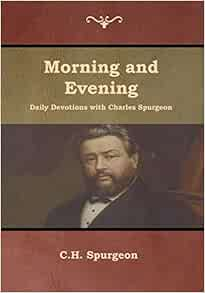
“She gleaned in the field after the reapers: and her hap was to light on a part of the field belonging unto Boaz, who was of the kindred of Elimelech.” – Ruth 2:3
Her hap was. Yes, it seemed nothing but an accident, but how divinely was it overruled! Ruth had gone forth with her mother’s blessing, under the care of her mother’s God, to humble but honourable toil, and the providence of God was guiding her every step. Little did she know that amid the sheaves she would find a husband, that he should make her the joint owner of all those broad acres, and that she a poor foreigner should become one of the progenitors of the great Messiah. God is very good to those who trust in him, and often surprises them with unlooked for blessings. Little do we know what may happen to us to-morrow, but this sweet fact may cheer us, that no good thing shall be withheld. Chance is banished from the faith of Christians, for they see the hand of God in everything. The trivial events of to-day or to-morrow may involve consequences of the highest importance. O Lord, deal as graciously with thy servants as thou didst with Ruth.
How blessed would it be, if, in wandering in the field of meditation to-night, our hap should be to light upon the place where our next Kinsman will reveal himself to us! O Spirit of God, guide us to him. We would sooner glean in his field than bear away the whole harvest from any other. O for the footsteps of his flock, which may conduct us to the green pastures where he dwells! This is a weary world when Jesus is away—we could better do without sun and moon that without him—but how divinely fair all things become in the glory of his presence! Our souls know the virtue which dwells in Jesus, and can never be content without him. We will wait in prayer this night until our hap shall be to light on a part of the field belonging to Jesus wherein he will manifest himself to us.
C. H. Spurgeon, Morning and Evening: Daily Readings (London: Passmore & Alabaster, 1896).
Discover more from Faithful Steward Ministries and FSM Women's Outreach
Subscribe to get the latest posts sent to your email.
 Faithful Steward Ministries and FSM Women's Outreach