
Here on this site, we write mainly about Worldviews, Sovereignty, and Apologetics. Having the proper Biblical or Christian worldview allows us the beginnings of being able to defend our (Apologetics) faith. Of course, one can not defend their faith or have a proper Biblical/Christian Worldview without first being grounded in the “Foundational Authority of Scripture.” God’s word must be the only standard by which we live and hold all other things (us included) accountable. His Holy Word is sovereign, if it was not we might as well read any other tall tale.
The gospel—Christ’s provision (2 Peter 1:3)
Peter now develops the need for continuing grace in the life of the believer. His divine power has given us everything we need for life and godliness. Here Peter refers to what Jesus has done for us. His divine power might refer to God’s power, but in verse 16 Peter reminds his audience of the power of Christ that he witnessed at the Transfiguration. It thus makes sense to assume that Peter is talking of Christ’s power, specially since Jesus was identified with God in verse 1. That verse also helps us know who the ‘we’ is to whom Peter refers. It could of course be the apostles, but after his insistence that his readers have received the same faith as the apostles, Peter is surely including them in what he is saying.Christ’s divine power not only called us to himself, but continues to supply everything that is necessary for us to be the Christians we should be. Christ supplies the wherewithal for life and godliness, in other words for the godly life all Christians should lead. This gracious supply of God is vital even for forgiven sinners. They must rely continually upon the source of life for continuing in that life. How good is the Lord whose great and godly power is used to his people’s advantage to enable them to live for him!
‘We’ have been given all this, says Peter, through our knowledge of him who called us by his own glory and goodness. This develops his reference to ‘knowledge’ in verse 2. Coming to know Jesus is what happened at conversion, but that knowledge continues to develop as we ‘grow up’ in Christ. Although it is usually God who ‘calls’ in the New Testament, there is no reason why Peter should not mean Christ here, for it is his glory to which Peter refers in verse 17 and he is the one who is ‘known’ both in 1:2 and in 3:18. So in coming to Christ and continuing to look to our relationship with him (knowing him), we find that we have been given everything we need for a godly life.
… by his own glory concerns the nature of Jesus himself. Glory is a word that describes Jesus’ divine character, a character of goodness and love which was most clearly demonstrated in the incarnation (see John 1:14, ‘we have seen his glory, the glory of the One and Only, who came from the Father, full of grace and truth’.) But Christ’s glory and goodness have also been seen in his gracious calling of people to himself as he carried out the will of the Father to save a people for himself (John 17:3–5).
him who called us reminds us of the Saviour’s initiating work in our coming to faith. In the Old Testament it was Israel whom God ‘called’ into being by his grace (Deuteronomy 7:6–9). The word does not refer simply to an outward call in the same way as I might call out to my son and hope that he would come, but with no guarantee that he will! Of course it can be used theologically in that way. For example, an evangelist may issue a ‘call’ from the pulpit for people to come to Christ in faith. In that sense people are ‘called’ and some will come and some will not. However, here the word is used with its full electing force. This is the sort of ‘call’ from the Saviour which is effective. It is the call which actually brings his covenant community into being. Peter picks up on this understanding of calling in verse 10 and refers to ‘calling and election’
Paul Gardner, 2 Peter & Jude, Focus on the Bible Commentary (Ross-shire, Great Britain: Christian Focus Publications, 1998), 22–24.
Bible (Gr. biblia, “books”) The canonical writings accepted as normative for a religious faith. In Christianity, the OT (Hebrew Scriptures) and the NT constitute the Bible. Theologically, the Bible is acknowledged in the church as a revelation from God.
Bible, as self-authenticating (Gr. autopistos, “self-faith”) A Reformation view that by the work of the Holy Spirit a person recognizes Scripture as the Word of God. It is not rational evidences or apologetic arguments that convince one of Scripture’s truth but rather the witness of Scripture itself by the Spirit.
Bible, the authority of the Recognition of the Bible’s status and function as providing a source and norm for such elements as belief, conduct, and the experience of God. See also authority.
Bible, canon of the See canon of Scripture1
Bible, the inerrancy of the belief that the Bible contains no errors of any sort and is completely truthful on all matters on which it teaches, such as history, science, and biology. Some equate “inerrancy” and “infallibility,” while others do not. See also inerrancy, doctrine of.
Bible, infallibility of the Commitment to a belief that the Bible is completely trustworthy as a guide to salvation and the life of faith and will not fail to accomplish its purpose. Some equate “inerrancy” and “infallibility”; others do not. For those who do not, infallibility does not necessarily entail inerrancy since the focus is on the theological purpose of Scripture.
Bible, inspiration of the (Gr. theopneustos, “God-breathed”; Lat. inspirare, “to breathe in”) Belief that God is the source behind biblical writings and acted through the Holy Spirit with the biblical writers (and editors) to communicate what God wished to communicate (2 Tim. 3:16; 2 Pet. 1:21).
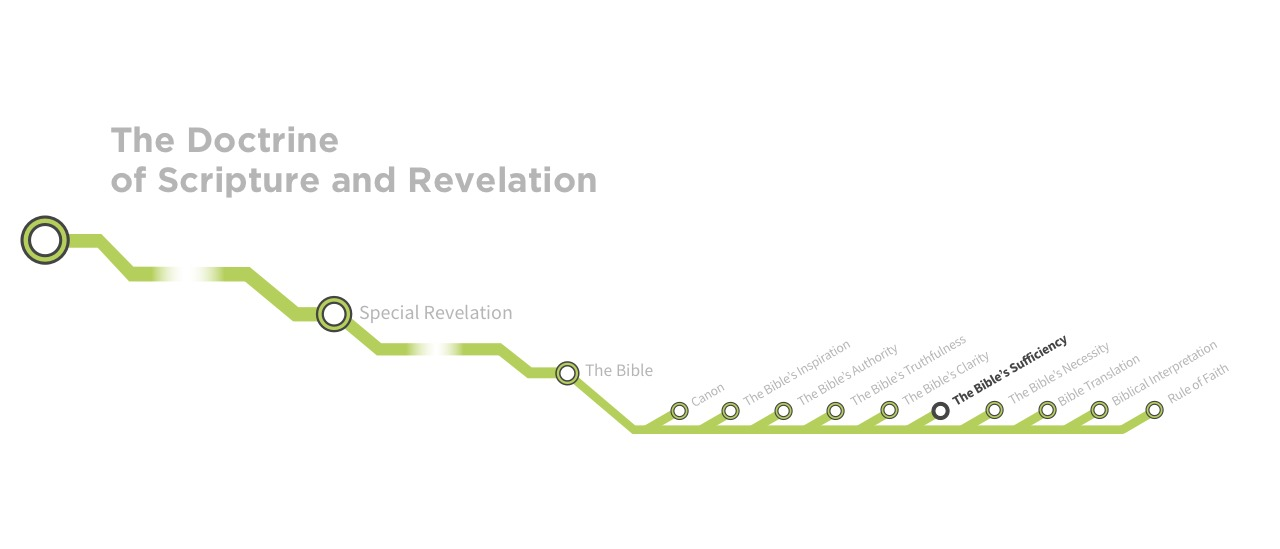
Bible, sufficiency of The view that the Bible as God’s Word presents all that is needed for salvation and the life of faith.
Donald K. McKim, The Westminster Dictionary of Theological Terms, Second Edition, Revised and Expanded. (Louisville, KY: Westminster John Knox Press, 2014), 31–32.
.
DEVOTIONAL

.March 09, 2024 by: John Owen

“That foundation being once laid, we shall be able to educe our following reasonings and arguments, wherein we aim more at weight than number, from their own proper principles.” John Owen gives thought to that which is the only foundation of the authority of Scripture.
- Cannon of Scripture ↩︎
Discover more from Faithful Steward Ministries and FSM Women's Outreach
Subscribe to get the latest posts sent to your email.
 Faithful Steward Ministries and FSM Women's Outreach