
CONTEXT
Statement of Hope and Invitation to Repent (6:1–3)
Transgression of the Covenant (6:4–11)
Joel R. Beeke, Michael P. V. Barrett, and Gerald M. Bilkes, eds., The Reformation Heritage KJV Study Bible (Grand Rapids, MI: Reformation Heritage Books, 2014), 1234.
THIS chapter gives an account of some who were truly penitent, and stirred up one another to return to the Lord, encouraged by his power, grace, and goodness, ver. 1, 2, 3 and of others, who had only a form of religion, were very unstable in it; regarded more the ceremonial law, and the external sacrifices of it, than the moral law; either that part of it which respects the love of the neighbour, or that which concerns the knowledge of God; and dealt treacherously with the Lord, transgressing the covenant, ver. 4, 5, 6, 7. particularly the city of Gilead is represented as full of the workers of iniquity, and is charged with bloodshed, ver. 8. yea, even the priests were guilty of murder and lewdness, ver. 9 and Israel, or the ten tribes in general, are accused of whoredom, both corporeal and spiritual, with which they were defiled, ver. 10. nor was Judah clear of these crimes, and therefore a reckoning day is set for them, ver. 11.
Ver. 5. Therefore have I hewed them by the prophets: I have slain them by the words of my mouth, &c.] Sharply reproved them for their sins by the prophets, who were as lapidaries that cut stone, or as hewers of timber that cut off the knotty parts; so these by preaching the terrors of the law, which is a killing letter, and by delivering out the threatenings of the Lord, and denouncing his judgments upon them for their sins, cut them to the heart, and killed them; for their foretelling and prophesying of their being slain, ruined, and destroyed, was a slaving of them; see Jer. 1:10. The Targum is, “because I admonished them by the message of my prophets, and they returned not, I will bring upon them those that slay, because they have transgressed the word of my will.” But the Septuagint, Syriac, and Arabic versions, and so Aben Ezra and Joseph Kimchi, understand these words, not of hewing, and cutting, and slaying of the people by the prophets, but of the cutting and slaying the prophets themselves, and read the words, therefore have I cut off the prophets, and slain them, &c.; either the false prophets, some of them that caused the people to err, that they might not repent, as Aben Ezra; as the prophets of Baal in the times of Elijah, and the Scribes and Pharisees in Christ’s time, who were in the way of the people’s repentance, reformation, and reception of Christ; these he cut off, and their doctrine, and condemned by his own, and the doctrine of his apostles, the words of the Lord’s mouth; see Zech. 11:8 and this he did for the good of his people, in answer to the question put by himself in the preceding verse; so Schmidt interprets it: or else the true prophets of God, who were exposed to death, to be cut off and slain, for the messages they were sent with: or those messages were such as were killing to them to carry them, and deliver them; and they were so constantly employed, early and late, in such service, that for the work of the Lord they were often nigh unto death: but our version, and the sense agreeable to it, seem best. And thy judgments are as the light that goeth forth; that is, their judgments, the people’s, a sudden change of person: meaning either the statutes and judgments prescribed them by the Lord, and to be observed by them; which were clear and plain as the light at noon-day, and therefore could not plead any excuse of ignorance of them, that they did not observe them: or the judgments of God upon them for their sins; which were open and manifest to all, and increasing like the light, more and more, and no more to be resisted than that; and the righteousness of God in them was very conspicuous; his judgments were manifest, and the justice of them. Some understand this of the judgments or righteousnesses of the saints, both imputed and inherent, Rom. 5:16; Luke 1:6. which appear light and clear, the darkness of pharisaism being removed by Christ. The Targum is, “my judgment goes forth as the light.”
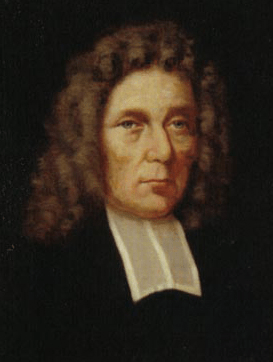
John Gill, An Exposition of the Old Testament, vol. 6, The Baptist Commentary Series (London: Mathews and Leigh, 1810), 407–408.
v.5 – Therefore; because I would do for you whatever might be done, because I would cure you of your obstinacy and hypocrisy, and make you upright and constant. I have hewed them; I have severely, continually, and unweariedly by the prophets reproved, warned, and threatened. Your hearts have been like knotty trees, or hardest stones: I have made my prophets like labourers, and my words like axes or hammers to cut off the knots, and to hew off the roughness which make unfit for use; but all to no purpose, the desired effect hath not been attained. By the prophets; some that were before Hosea. Jeroboam the First was by a prophet reproved and threatened for this idolatry, in which Israel persisted, and to which Judah did too often fall; and through the space of two hundred years, from Jeroboam the First to Hosea’s time, many other prophets were sent, whose names, and some memoirs of them, we have, as Ahijah, Jehu, Hanani, Elijah, and Elisha. These and such like were the prophets that did hew crooked and knotty Israel. I have slain them: some say the false prophets are the persons meant here, whom God did slay for their sin, seducing Israel to, and confirming them in, idolatry; indeed Elijah’s sincere zeal did cut off so many, 1 Kings 18:22, 40, and Jehu’s counterfeit zeal cut off so many, 2 Kings 10:21, 25, that it could never be forgotten among that people. So the thing is true, many false prophets were slain for this sin; yet the persons in our text were not these false prophets, but they were the people of Israel and Judah, the idolatrous, refractory hypocrites among them, whom God threatened with death, and that by the sword of enemies. By the words of my mouth; as he did by his word foretell, so he did effect too in due time. Thy judgments are as the light that goeth forth, i.e. the punishments threatened, the miseries foretold, which fell upon this people, did so fully answer the prediction, that every one might see them clear as the light, and as constantly executed as the morning. So Zeph. 3:5.
Matthew Poole, Annotations upon the Holy Bible, vol. 2 (New York: Robert Carter and Brothers, 1853), 865.
STUDY
Discover more from Faithful Steward Ministries and FSM Women's Outreach
Subscribe to get the latest posts sent to your email.
 Faithful Steward Ministries and FSM Women's Outreach