
“Lord, help me to glorify thee; I am poor, help me to glorify thee by contentment; I am sick, help me to give thee honour by patience; I have talents, help me to extol thee by spending them for thee; I have time, Lord, help me to redeem it, that I may serve thee; I have a heart to feel, Lord, let that heart feel no love but thine, and glow with no flame but affection for thee; I have a head to think, Lord, help me to think of thee and for thee; thou hast put me in this world for something, Lord, show me what that is, and help me to work out my life-purpose: I cannot do much, but as the widow put in her two mites, which were all her living, so, Lord, I cast my time and eternity too into thy treasury; I am all thine; take me, and enable me to glorify thee now, in all that I say, in all that I do, and with all that I have.”
Extract from; C. H. Spurgeon, Morning and Evening: Daily Readings (London: Passmore & Alabaster, 1896).

CONTEXT:
CHAPTER 3 – The apostle declareth it to be the design of both his Epistles to remind the brethren of Christ’s coming to judgment, in opposition to scoffers, 1–7. No argument can be drawn against it from the delay, which is designed to leave men room for repentance, 8, 9. He describeth the day of the Lord, and exhorteth to holiness of life in expectation of it, 10–14. He showeth that Paul had taught the like in his Epistles, 15, 16; and concludeth with advice to beware of seduction, and to grow in Christian grace and knowledge, 17, 18.
Matthew Poole, Annotations upon the Holy Bible, vol. 3 (New York: Robert Carter and Brothers, 1853), 925.
CONCLUDING COMMAND TO AVOID ERROR AND GROW IN GRACE (3:17–18)
Peter ended his epistle by summarizing its two main points. First, God’s beloved people must be watchful (beware) against false and lawless teachings (the error of the wicked), so that they persevere, established and stable in the faith (stedfastness, cf. 1:12; 1 Peter 5:10), as he exhorted them in chs. 2–3. Second, they must not be stagnant, but grow in grace and knowledge of Christ, as he exhorted them in ch. 1, so that Christ will receive glory as their Saviour. The doxology to Christ (To him be glory … for ever) implies that He is God, eternally equal to the Father in honor (1 Peter 4:11).
Joel R. Beeke, Michael P. V. Barrett, and Gerald M. Bilkes, eds., The Reformation Heritage KJV Study Bible (Grand Rapids, MI: Reformation Heritage Books, 2014), 1833.
v.18 – But grow in grace. He also exhorts us to make progress; for it is the only way of persevering, to make continual advances, and not to stand still in the middle of our journey; as though he had said, that they only would be safe who laboured to make progress daily.
The word grace, I take in a general sense, as meaning those spiritual gifts we obtain through Christ. But as we become partakers of these blessings according to the measure of our faith, knowledge is added to grace; as though he had said, that as faith increases, so would follow the increase of grace.
To him be glory. This is a remarkable passage to prove the divinity of Christ; for what is said cannot belong to any but to God alone. The adverb of the present time, now, is designed for this end, that we may not rob Christ of his glory, during our warfare in the world. He then adds, for ever, that we may now form some idea of his eternal kingdom, which will make known to us his full and perfect glory.
John Calvin and John Owen, Commentaries on the Catholic Epistles (Bellingham, WA: Logos Bible Software, 2010), 426.
Devotional/Study
2 Peter 3:14–18 – Life in the Light of the Coming
Peter sets two ideals before his readers. When Christ comes they should be ‘without spot or blemish’ (14), cf. Eph. 5:27. We are not called to approximate to some abstract ideal. We are to let the Holy Spirit work out the perfection of what we are. God made us all different, and those differences are preserved in time and doubtless in eternity. It is the flaws and stains for which God is not answerable that are to vanish. Then we are to be ‘at peace’ (14). Does the thought of His Coming stir any fears in us? If so we are not at peace with Him. Do our circumstances create anxiety in us? Then we do not enjoy His peace, i.e. God’s riches in Christ Jesus.
We sometimes complain that there are things hard to understand in the Bible, as though God were small enough to be comprehended by our formulas. Even Peter, the fisherman, found Paul, the scholar, hard to understand at times (16). Where we find such difficulties we should humbly tell God and our fellow men that we do not understand. Not so the proud man. He must find a meaning, even if he twists the Scriptures and deduces doctrines dishonouring to God and harmful to man (16 f.).
Peter’s last word is ‘grow’ (18). That is one of the wonders of being a Christian. We have all eternity to grow in, and eternity will be insufficient to exhaust the wonders of God.
Thought: Beware of controversy, for in controversy we are most likely to twist Scripture to suit our views.
Questions for further study and discussion on 2 Peter
What does ‘faith’ mean to Peter (1:1, 5)? Compare his treatment with that of Paul and James.
What positive lessons concerning the understanding of the Bible can be gained from 1:20 f.? What other Scriptures are relevant to this subject?
Remembering the abundance of Christian cults, whose members visit from door to door, what should be (a) our attitude towards, and (b) method of dealing with, such false teachers?
In the light of ch. 3, how should the doctrine of the Second Coming affect our living?
Arthur E. Cundall et al., Romans–Revelation, vol. 4, Daily Devotional Bible Commentary (A. J. Holman Company, 1974), 434.
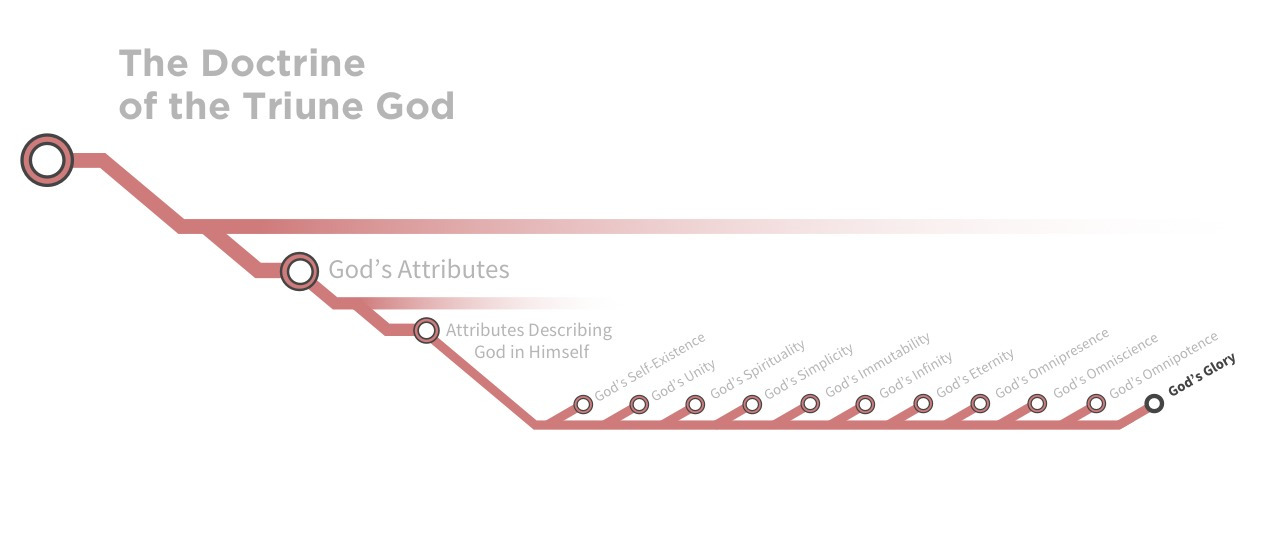
The glory of God is the splendor and brilliant beauty that shines through all of the divine attributes but is especially evident in the crucified and risen Christ.
God’s glory is the manifestation of the perfection of all of his attributes. The doctrine of the glory of God emphasizes his greatness and transcendence, his splendor and holiness. God is said in Scripture to be clothed with glory and majesty (1 Chr 16:27; Pss 29:4; 96:6; 104:1; 113:4). Creation manifests the glory of its Creator (Pss 8; 19:1–2; Isa 6:3).
But it is particularly in the realm of divine grace that God’s glory is seen. God’s ancient people saw his glory as he showed them mercy and grace in his deliverance of them from Egyptian bondage (Exod 16:7, 10; 33:18–34:8; Lev 9:23; Deut 5:24). God’s glory filled the places that he subsequently designated as meeting places with his people: the tabernacle (Exod 40:34) and the temple (1 Kgs 8:10–11).
Above all, the glory of God is present in the life of the Lord Jesus (John 1:14; Heb 1:3), and through his Holy Spirit of glory (1 Pet 4:14), God’s glory fills the church (2 Cor 3:18; John 17:10). It was their encounter with God on the plane of history that thus enabled the biblical authors to see God’s beauty and loveliness shining through the created realm. Idolatry, then, is the failure to give God his rightful glory—and to assign that glory to a creature. God is rightly driven by his glory: repeatedly in books such as Ezekiel, he cites his glory, his name and reputation, as his motivation for a particular action (Ezek 36:23). “I am the Lord,” he says, through Isaiah; “my glory I give to no other” (Isa 42:8).
An associated concept is the beauty of the Lord. For example, in Psalm 27:4, the psalmist says, “One thing I asked of the Lord, that will I seek after: to live in the house of the Lord all the days of my life, to behold the beauty of the Lord” (NRSV). Here, beauty is ascribed to God as a way of expressing the psalmist’s conviction that the face-to-face vision of God is the profoundest experience available to a human being. Again, in Psalm 145:5, the psalmist states that he will meditate “on the glorious splendor” or beauty of God’s majesty (NRSV). Similarly, the prophet Isaiah, in the eighth century BC, predicted that there is coming a day when God will be “a garland of glory and a diadem of beauty” to his people (Isa 28:5 NRSV). This prophecy found its fulfillment in Jesus Christ, whose beauty and glory was preeminently displayed in his crucifixion and death for sinners, manifesting perfectly the love and justice of God, and in his resurrection, ascension, and session at the right hand of God (John 7:39; 17:5; Heb 1:6).
KEY VERSES
Is 6:3; Ps 19:1–2; Ex 33:18–34:8; Jn 1:14; Jn 7:39; 2 Co 3:17–18; Heb 1:3
Michael A. G. Haykin, “God’s Glory,” in Lexham Survey of Theology, ed. Mark Ward et al. (Bellingham, WA: Lexham Press, 2018).
The Scriptural Doctrine – The Goodness of God
The third method of dealing with this question is to rest satisfied with the simple statements of the Bible. The Scriptures teach, (1.) That the glory of God is the end to which the promotion of holiness, the production of happiness, and all other ends are subordinate. (2.) That, therefore, the self-manifestation of God, the revelation of his infinite perfection, being the highest conceivable, or possible good, is the ultimate end of all his works in creation, providence, and redemption. (3.) As sentient creatures are necessary for the manifestation of God’s benevolence, so there could be no manifestation of his mercy without misery, or of his grace and justice, if there were no sin. As the heavens declare the glory of God, so He has devised the plan of redemption, “To the intent that now unto the principalities and powers in heavenly places, might be known by the Church the manifold wisdom of God.” (Eph. 3:10.) The knowledge of God is eternal life. It is for creatures the highest good. And the promotion of that knowledge, the manifestation of the manifold perfections of the infinite God, is the highest end of all his works. This is declared by the Apostle to be the end contemplated, both in the punishment of sinners and in the salvation of believers. It is an end to which, he says, no man can rationally object. “What if God, willing to shew his wrath (or justice), and to make his power known, endured with much long suffering the vessels of wrath fitted to destruction: and that He might make known the riches of his glory on the vessels of mercy, which He had afore prepared unto glory.” (Rom. 9:22, 23.) Sin, therefore, according the Scriptures, is permitted, that the justice of God may be known in its punishment, and his grace in its forgiveness. And the universe, without the knowledge of these attributes, would be like the earth without the light of the sun.
The glory of God being the great end of all things, we are not obliged to assume that this is the best possible world for the production of happiness, or even for securing the greatest degree of holiness among rational creatures. It is wisely adapted for the end for which it was designed, namely, the manifestation of the manifold perfections of God. That God, in revealing Himself, does promote the highest good of his creatures, consistent with the promotion of his own glory, may be admitted. But to reverse this order, to make the good of the creature the highest end, is to pervert and subvert the whole scheme; it is to put the means for the end, to subordinate God to the universe, the Infinite to the finite. This putting the creature in the place of the Creator, disturbs our moral and religious sentiments and convictions, as well as our intellectual apprehensions of God, and of his relation to the universe.
The older theologians almost unanimously make the glory of God the ultimate, and the good of the creature the subordinate end of all things. Twesten, indeed, says it makes no difference whether we say God proposes his own glory as the ultimate end, and, for that purpose, determined to produce the highest degree of good; or that He purposed the highest good of his creatures, whence the manifestation of his glory flows as a consequence. It, however, makes all the difference in the world, whether the Creator be subordinate to the creature, or the creature to the Creator; whether the end be the means, or the means the end. There is a great difference whether the earth or the sun be assumed as the centre of our solar system. If we make the earth the centre, our astronomy will be in confusion. And if we make the creature, and not God, the end of all things, our theology and religion will in like manner be perverted. It may, in conclusion, be safely asserted that a universe constructed for the purpose of making God known, is a far better universe than one designed for the production of happiness.
Charles Hodge, Systematic Theology, vol. 1 (Oak Harbor, WA: Logos Research Systems, Inc., 1997), 435–436.
Discover more from Faithful Steward Ministries and FSM Women's Outreach
Subscribe to get the latest posts sent to your email.
 Faithful Steward Ministries and FSM Women's Outreach